Feeds:
Posts
Comments

Archive for February, 2021

Letting Go

MEDITATION:

Written by John Van Schepen, a contemporary retired pastor and author.  

Children, what would you say if I asked you to throw your most treasured toy into the garbage? Young people, as you look to the future, imagine being asked to forget about one of your main goals, such as marriage or a college education. And what about the things you have right now? Is your most prized possession a car? A career? Your stock portfolio? Could you consider them rubbish right now? Really?

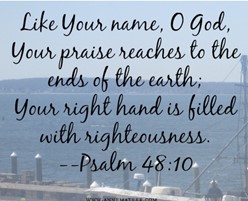
Paul was one of the most successful young men in his community. He had the right credentials by birth, learning, and life experience. Yet he was willing to consider it all rubbish. Why? Certainly not for an easier life or for fame and glory. He knew that letting go was the only way to receive God’s gift of righteousness through faith in Christ.

Are you holding on to something that is preventing you from stretching out your hand to receive God’s gift of righteousness by faith? This gift includes the forgiveness of sins, a new life of service to the Lord, and eternal life. Everything you have or might like to have pales in comparison to the gift of God’s righteousness through faith in Christ. Receive him as Lord, and the gift of his righteousness will be yours.

PRAYER:

Written by William Barclay (1907-1978), a Scottish author, radio and television presenter, professor of Divinity, and minister in the Church of Scotland.

Grant, O God, that we may never lose the way through our self-will, and so end up in the far countries of the soul; that we may never abandon the struggle, but that we may endure to the end, and so be saved; that we may never drop out of the race, but that we may ever press forward to the goal of our high calling; that we may never choose the cheap and passing things, and let go the precious things that last forever. that we may never take the easy way, and so leave the right way; that we may never forget that sweat is the price of all things, and that without the cross, there cannot be the crown. Amen.
Read Full Post »

God’s Perfection

MEDITATION:

Written by Erwin Lutzer, a contemporary pastor, teacher, and author.   This reflection is excerpted from his writing “The Gospel of Righteousness.”

The question before us, the question that goes to the heart of what we call the Gospel, is: How do we become as perfect as God? The great reformer Martin Luther grappled with the same question: How can a sinner receive the favor of a holy God who is just and hates sin? … To understand the Gospel, let’s begin by considering the phrase the righteousness of God, which troubled Luther greatly. If God were not so righteous, we would have a better chance to win His favor, but it is His righteousness that stands as a barrier between us and Him.

We can all identify with Luther’s dilemma. If God were not so holy—if He were more like us—then we might be able to meet His requirements. But the Bible, and even our own conscience, tells us that we are sinners, and we can’t reach the high standard of God’s righteousness by our own efforts. But Luther learned, as we must, that righteousness is not just an attribute of God, but there is also a “righteousness from God,” which is a gift given to those who believe on Christ. To put it plainly, in Christ God meets His own requirements for us. We have no righteousness of our own, so God gives us His own righteousness as a free gift. In other words, God demands righteousness, and through the death and resurrection of Christ, God supplies the righteousness that He demands! The blood of Christ covers our sins so that we can come into the presence of God. And when it is time for us to die, we are welcomed into Heaven as if we were Jesus because we are saved solely on the perfections of His merit and grace.

PRAYER:

Written by Anselm of Canterbury (1033-1109), a Benedictine monk, abbot, philosopher and Christian theologian. He served as the archbishop of Canterbury from 1093-1109.

O Lord Jesus Christ, our redemption and our salvation, we praise you and give you thanks. Though we are unworthy of your benefits,  and cannot offer to you the devotion you deserve,  let your loving-kindness complete whatever our weakness tries to do.

Before you, O Lord, we lay all our desires, and whatever our heart rightly wishes, it is because of your gift. Help us love you as you command. Do not let your gift be unfruitful in us. Complete what you have begun, give what you have made us desire, convert our lukewarmness into fervent love of you; for the glory of your holy name. Amen.

Read Full Post »

God’s Righteousness

MEDITATION:

Written by Dr. Bill Bright (1921-2003), an American evangelist, author, and founder of Campus Crusade for Christ. This is an excerpt from his book “The Joy of Trusting God.”

God’s holiness and His righteousness are not the same. Holiness is a condition of purity or freedom from sin. God’s righteousness is the quality or attribute of God that causes Him to act in accordance with His own nature, will, and law. In other words, holiness describes God’s nature; righteousness describes how God acts according to His holiness. God’s laws are holy because they come from His nature. God’s standards for enforcing His laws are always righteous.

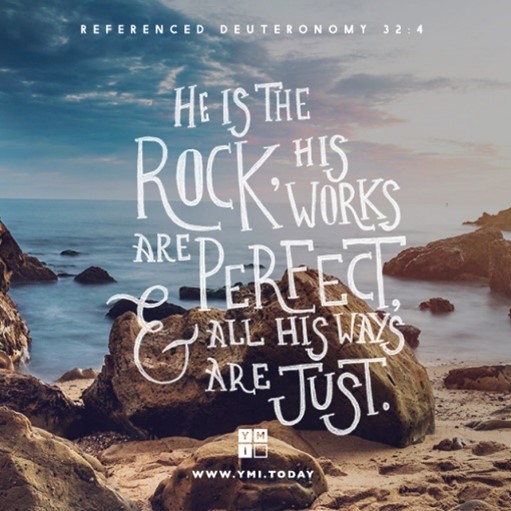
Everything God does is perfectly right in every way…For God, righteousness is not an external standard that He must adhere to; righteousness is part of His very nature. It is impossible for God to do anything wrong. He has never made a wrong determination. He has never had to reverse a decision when He learned more facts. God does not struggle with right and wrong…His laws reflect His own righteous nature and the moral perfection of His character. Cultural bias, a lack of knowledge, or any other factor does not alter His rulings…His laws lay out the responsibilities for which God holds us accountable. They serve as a yardstick by which God measures our righteousness. When His laws are broken, He must punish anyone who defies His righteous laws…His righteous laws focus on standards for acting rightly toward one another…We cannot live righteously without the enabling of the Holy Spirit, and His power is released through our faith.

PRAYER:

The prayer today is from a collect (short general prayer used in Christian liturgy) from the 6th century.

O Sun of Righteousness and the Light Eternal,

you give gladness to all things!

Shine on us both now and forever

that we may walk always in the light of your presence;

through Jesus Christ our Lord. Amen.

Read Full Post »

Path of Righteousness

MEDITATION:

Written by Max Lucado, a contemporary pastor and author.  This is from his devotional book “Everyday Blessings.”

The path of righteousness is a narrow, winding trail up a steep hill. At the top of the hill is a cross. At the base of the cross are bags. Countless bags full of innumerable sins. Calvary is the compost pile of guilt. Would you like to leave yours there as well?

PRAYER:

Written by Clement of Rome (?-99), considered to be the first Apostolic Father of the church, one of the three chief ones together with Polycarp and Ignatius of Antioch. He was the second or third bishop of Rome, after Peter.

You, Lord, through your works have revealed the everlasting structure of the world. You, Lord, created the earth. You are faithful throughout all generations, righteous in your judgments, marvelous in strength and majesty, wise in creating and prudent in establishing what exists, good in all that is observed and faithful to those who trust in you, merciful and compassionate; forgive us our sins and our injustices, our transgressions and our shortcomings.

Do not take into account every sin of your servants, but cleanse us with the cleansing of your truth, and “direct our steps to walk in holiness and righteousness and purity of heart,” and “to do what is good and pleasing in your sight” and in the sight of our rulers. Yes, Lord, “let your face shine upon us” in peace “for our good,” that we may be sheltered “by your mighty hand” and delivered from every sin “by your uplifted arm”; deliver us as well from those who hate us unjustly.

Read Full Post »

Making Things Right

MEDITATION:

Written by James C. Fenhagen, an Episcopal rector, author, theological educator, seminary president, and lecturer. This is an excerpt from his book “Invitation to Holiness.” ritten by Rick Warren, a contemporary evangelical pastor and author.

The biblical use of the word “righteousness” is the moral equivalent of what we mean when we speak of holiness. It incorporates such concerns as a passion for justice and a concern for truth along with the need to live an ethically responsible life. It involves reflecting in what we do the Christian moral vision by which we understand who we are. Righteousness is the human expression of holiness embodying a vision rooted in moral perspective. In the New Testament the same word is used for righteousness that is used for justification. As New Testament scholar John Koenig puts it, righteousness is God making things right.”

PRAYER:

From the Sarum Primer, a book of prayers and Christian worship resources from the 1500s, collected at the Salisbury Cathedral.

O God of strength,

you surpass all understanding,

and you mercifully give your people mercy and judgment.

Empower us to faithfully love you,

and to walk this day in the way of righteousness through Jesus Christ our Lord. Amen.

Read Full Post »

Right Relationship

MEDITATION:

Written by Rick Warren, a contemporary evangelical pastor and author.

Righteousness is a big word in the Bible. It’s used hundreds of times. The Bible says that God loves righteousness, and that God is righteous. It says that one day God is going to judge the world in righteousness. Psalm 23 says that God leads us in the paths of righteousness. So what in the world does this word mean? I once looked it up in a theological dictionary, and its definition went on for 27 pages! But I’ll boil it down to two things: Righteousness is a relationship and a lifestyle. Righteousness simply means being right with God. The Good News is that God made us right with himself through Jesus’ death as a payment for our sins. Because of Jesus’ death, we can have a personal relationship with God. Righteousness is also a lifestyle. It means living right as God intends.

So why should you care about being right with God? Because it’s the only way to live. When you are disconnected from God, you’re not really living; you just exist. Most people in the world aren’t really fully alive. They just exist, trying to make it to the weekend. But to be disconnected from your Creator who made you for a purpose is nonsense. Life is not about the acquisition of things or the achievement of goals. Life is about getting to know God—the one who loves you and made you for a purpose. You’re not really living until you’re right with God and have a relationship with him. You can’t blame God, because he gives you the choice right now to have a relationship with him. He wants you to choose to love him! And when you do, you will be made right with him. It will change your life—here on earth and for eternity!

PRAYER:

From the Roman Breviary, the book of the Latin liturgical rites of the Catholic Church. Published in 1482, it became known as the Liturgy of the Hours.

Most gracious God,

to know and love your will is righteousness,

enlighten our souls with the brightness of your presence,

that we may both know your will and be enabled to perform it;

through Jesus Christ our Lord. Amen.

Read Full Post »

Authority of Scripture

MEDITATION:

Written by Timothy Keller, a contemporary pastor, speaker, and author. This is excerpted from his article “Authority.”

The root idea of modernity is the overturning of all authority outside of the self. In the 18th century European ‘Enlightenment’ thinkers insisted that the modern person must question all tradition, revelation, and external authority by subjecting them to the supreme court of his or her own reason and intuition. We are our own moral authority.  In spite of this tectonic philosophical shift, modern society nonetheless continued to be dominated by relatively stable institutions for a long time. People still were able to root their identities to a great degree in family and clan, in local civic communities, and in their work or vocation. All that seems now to be passing because of the ‘acid’ of the modern principle, namely that individual happiness must come before anything else. Marriage and family, workplace and career, neighborhood and civic community—none of these institutions now remain stable long enough for individuals to depend on them. …
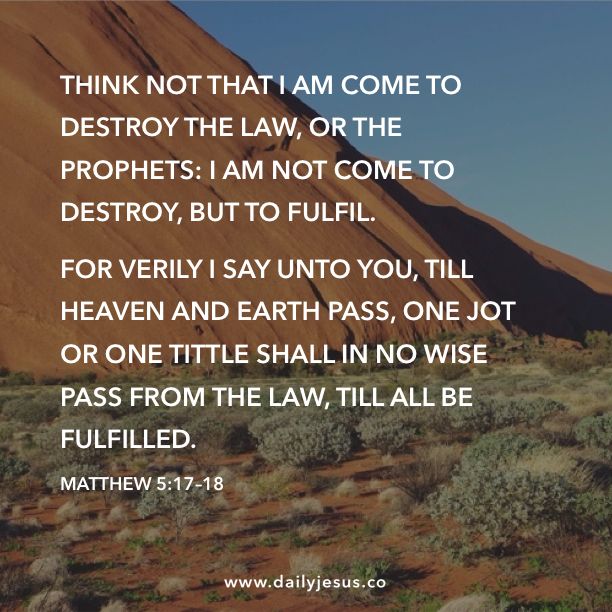
 Many years ago as a young Christian my attention was arrested by an article on ‘Authority’ by John Stott. Stott asked, “Why should people believe that the Bible is God’s Word written, inspired by his Spirit and authoritative over their lives?” This was a big question for me. Stott answered that we do not believe it simply because we want to be dogmatic and certain about our own beliefs, nor because the church has consistently taught this (though it has), nor because we just ‘feel’ the Bible is true as we read it. “No. The overriding reason for accepting the divine inspiration and authority of Scripture is plain loyalty to Jesus…Our understanding of everything is conditioned by what Jesus taught. And that includes his teaching about the Bible. We have no liberty to exclude anything from Jesus’ teaching and say, ‘I believe what he taught about this but not what he taught about that.’ What possible right do we have to be selective?”   Stott’s question is like a hammer blow to our contemporary way of life. We feel strongly that we have the right, even the obligation to select what parts of Jesus teaching we can accept and what parts we cannot. But that makes no sense. Why should you trust in him as Savior if you are wiser and smarter than he is? Either he is who he said he is, and his views judge our views, or he was lying or deluded about being the Son of God. So Jesus’ authority and the absolute authority of the Bible stand or fall together.

PRAYER:

From the Mozarabic Rite, developed during the Visigoth rule of the Iberian peninsula in the 500s.

Let the light of your face shine on us, O Lord,

that your Word may go forth

and give light and understanding

to nourish the hearts of the simple.

Set our desires on your commandments,

so that we may receive with open heart

the Spirit of wisdom and understanding.

Read Full Post »

Authority Problem

MEDITATION:

Written by Adam York, a contemporary Christian author.

You could say that our culture has an authority problem. Fifty years ago, respect for authority was the rule rather than the exception. Job titles like president, senator, general, or reverend used to be enough to demand people be treated with authority. The reasoning was simple: Somebody thought enough of those people to put them in positions of authority so they could be respected and trusted. Respect for authority has eroded in the span of a few decades because of a lack of trust. People used to trust their authorities, then their authorities betrayed them (at least in popular opinion). In addition to the trust issue, we tend to see authority as an encroachment on our freedom to do what we want, when we want. If someone has authority, it means he or she is in a position to wield power and command over things, but we don’t like anyone–or anything, for that matter–to have power over us.

Authority is a word that comes up frequently when people talk about Scripture. When we say the Bible has authority in our lives, we mean what’s written in it establishes truth and determines how we are to live as Christians. But how can the Bible do that? And how do we not allow our personal authority issues to conflict with the role God’s Word is supposed to play in our lives? At the root of our objections to authority is our sense of entitlement. We believe we have the right to do anything we want to do, and we’re ready to cry “foul” the moment someone or something infringes on those rights. We’re kidding ourselves if we think that’s true. We were purposefully imagined and crafted into being by the God of the universe. He’s the One who made us, so His is the ultimate authority in our lives. As the One who made everything, God is really the only being in all the universe who can rightly claim “rights.” He’s the One with all the authority, and the Bible, as God’s Word, carries that authority in its pages. That means the Bible isn’t just a book. It’s not like Poor Richard’s Almanac or another book of wise sayings. It doesn’t contain merely suggestions or advice. To say the Bible has authority is to recognize its great differences from other books… Through the power of the Holy Spirit, we find that when we go to the Bible to read it, it actually reads us. We see ourselves measured against its commands. Our true motivations are revealed in its characters. And the goodness and grace of the gospel drips off its pages.

PRAYER:

Written by The Lasallian Brothers, a religious teaching organization founded by Jean-Baptiste de LaSalle (1641-1719) in France and is now based in Rome.

Let us pause and remember that the God Who created us, Who redeemed us, and Who calls us to holiness and wholeness, is forever with us. We are God’s people and we continually live in His presence. Glory to You, Source of All Being, Eternal Word, and Holy Spirit. As it was, is now, and forever shall be. It is You Who nourishes us through Word and Sacrament. All glory and praise to You. Amen.

Read Full Post »

« Newer Posts