Feeds:
Posts
Comments

Archive for December, 2021

Reflection on the Two Kings

MEDITATION:

Written by Daniel Darling. This is an excerpt from his book “The Characters of Christmas.”

Matthew’s gospel is all about Jesus as king. This is why he opens with a genealogy establishing Jesus as rightful heir to the throne of David. And it’s why Matthew sets up a contrast with another king, Herod, the bloodthirsty ruler of the Jews appointed by Rome. This is Herod the Great, who kept power by attacking and often killing his political enemies (and even family members) and who built impressive architecture in Israel. The prominent and wealthy men from the East traveled far and wide, not to sit at the feet of the one who sat on a throne in Jerusalem, but to bow before an infant in a house in Bethlehem. The star from heaven didn’t point to Herod, but to Jesus. Matthew is telling us that true worshippers worship the true King. While most of Israel slept in spiritual lethargy and those who knew the Scriptures—the scribes and the chief priests—were more fearful of Herod than God, these men had the faith to worship the One who deserved worship: Jesus.

The presence of these men from the East—outsiders, Gentile—is a confirmation of God’s promise to send a Messiah who would not only be the King of the Jews, but a Messiah for the nations. Jesus’ kingdom is a kingdom not just for insiders, but for outsiders. In fact, many insiders—those who were closest to Jesus—were most resistant to His message. And so it often is today. Those who are most “churched” are often those who are so blinded by self-righteousness they cannot see—we cannot see—the gospel. And it is often those who seem so far from God whom God by His Spirit is drawing. This should also give us pause when we begin to think that the gospel is only for people who look like us, who come from our background, who speak our language. The truth is that if you live in the West, you are likely one of the “outsiders” to whom the gospel had to be extended; you are part of the Gentile nations who were furthest from Jesus. We should thank God that His promise wasn’t only for a certain ethnic group, but that in His kingdom, we see every nation, tribe, and tongue represented. This is a global kingdom. Let’s pray that our churches reflect heaven’s reality, the beautiful diversity of the kingdom of God.

SCRIPTURE: Matthew 2:3-8

MUSIC VIDEO: Christmas Day

Performed by Chris Tomlin and We the Kingdom

Read Full Post »

Reflection on the Innkeeper

MEDITATION:

Written by Jeff Taylor, a contemporary author.

None of the biblical accounts of the birth of Jesus even mentions the innkeeper. In fact, the only reference to a manger or an inn is in the Book of Luke. “And she gave birth to her first-born son and wrapped him in swaddling cloths, and laid him in a manger, because there was no place for them in the inn.” On the basis of that single sentence, we convict the innkeeper of shutting Jesus out. Perhaps we have been too hard on him. I think the innkeeper is an improbable hero. He had no reason to know that the strangers at his door were about to bring the Messiah into the world. Had he known, perhaps he would have made room for them, but that would have meant that some other weary travelers would need to be displaced. Yet, rather than making excuses, the innkeeper was resourceful, and gave what he could give—not a room or even a corner in his already crowded inn, but the stable that demonstrates that the King of the world is at home with the humblest of the humble.

The arrival of the long-expected Messiah stood out in contrast to peoples’ expectations. He did not come in a manner befitting of a king. No pomp and circumstance, no great earthquake, no thunder and lightning, no burning bush, but humbly and anonymously in a barn to a young unmarried woman. The Jesus born in those surroundings would grow up to teach us to believe the unbelievable, to be prepared for the unexpected, and that the poor and meek will occupy a prominent place in the Kingdom of Heaven. Less prominent than even the lowly shepherds and animals, the innkeeper is neither mentioned by the writers of the gospel nor placed in the crèches that adorn our mantels and tables during Christmastime. Rather, he was and is behind the scenes, humbly and anonymously playing a major part in God’s great plan. He serves as a reminder to us that God uses what we have. Perhaps we should be more like the innkeeper.

SCRIPTURE: Luke 2:6

MUSIC VIDEO: The Song of the Innkeeper

Performed by Jason Gray

Read Full Post »

MEDITATION:

Written by Michael Dyer.

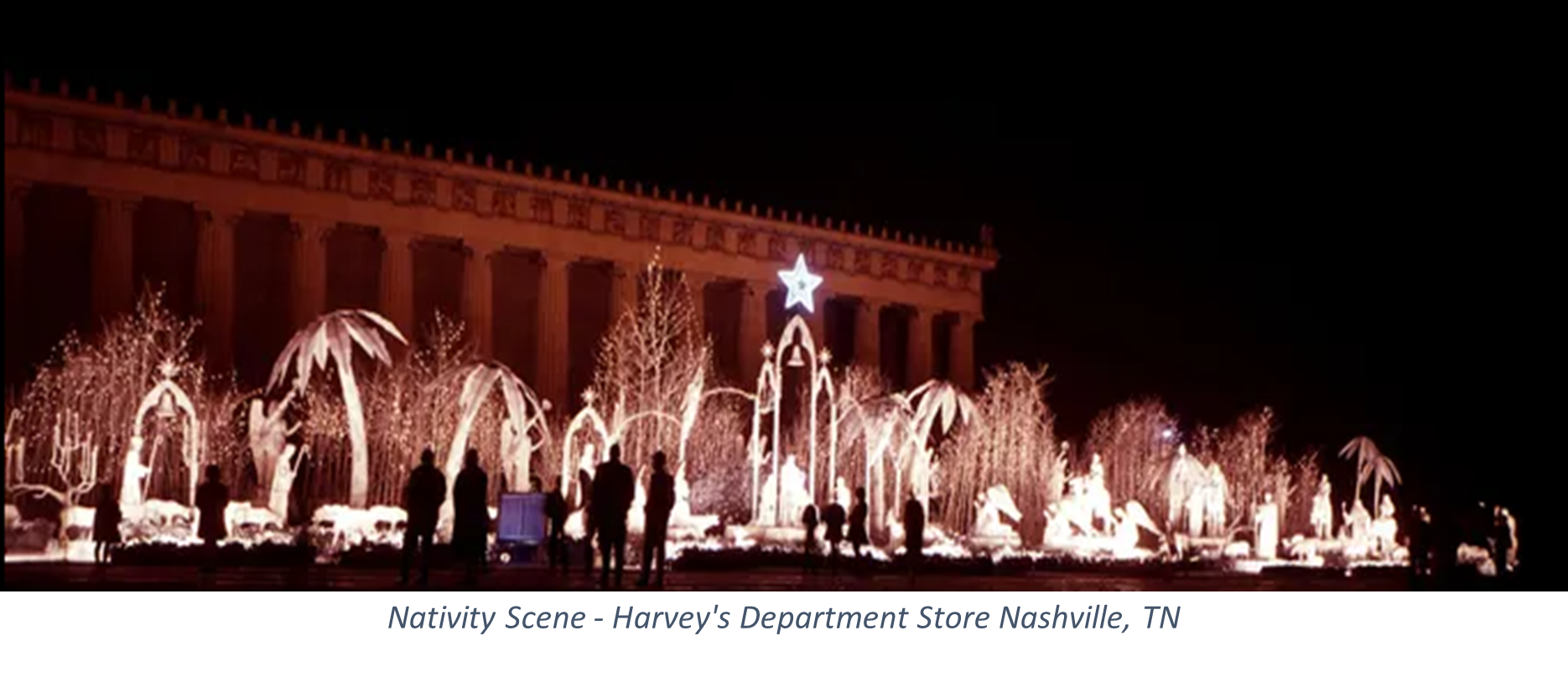
I grew up in an era when Christian displays could occur on city public property. An important family Christmas tradition in my hometown Nashville, TN, was to see the Nativity Scene exhibit in Centennial Park. This Nativity Scene, which first appeared in 1953, was an elaborate exhibit commissioned by the Harvey’s Department Store. It drew thousands of visitors from Tennessee and Kentucky during the Christmas season. Christmas carols played and an elaborate light show continuously illuminated the characters throughout the evening. I particularly recall my connection between the exhibit and the hymn “The First Noel.” Both addressed Jesus’ wondrous appeal to shepherds, members of the least admired occupations in Biblical times, and the Magi, members of Persia’s” intelligentsia.” Jesus coming was first proclaimed to “the least” yet was also acknowledged by those of great privilege. The Magi endured a long arduous journey to witness his birth and bring gift offerings. The exhibit, hymn, and the myriad of people who witnessed the exhibit reinforced my belief that God, through Jesus Christ, is available to all of us, regardless of our heritage, occupation, or circumstances. Sometimes Jesus appears spontaneously and dramatically (shepherds heralded by the heavenly hosts or “born again moments), other times it occurs after a lengthy personal journey (Magi). Regardless, we simply need to be open to his presence in our lives and he can enter. Time, weather-related decay, and social/political mores eliminated the Nativity exhibit in 1967. Jesus though is always with us, as is the memory of the Nashville Nativity for those of us blessed to experience it.

SCRIPTURE: 1 John 4:8-10

VIDEO: Nativity Scene: Memories of Nashville

 If using an advent wreath, light the two purple candles, the rose-colored candle and the third purple candle. The fourth candle represents peace and is called the “Angel’s Candle.” The angels announced that Jesus came to bring peace–He came to bring people  close to God and to each other again.

Read Full Post »

Reflection on Angels

MEDITATION:

Written by Peter Beck, a contemporary pastor, author, and professor of religion.

Ever see a frightening angel in a nativity scene? Me neither. They’re always cute little kids or beautiful women (or really effeminate-looking men). The same thing is true of the angels on most Christmas trees. That’s just not right. Biblically speaking, angels were frightful creatures, not because they were ugly but because of the strangeness of an encounter with a heavenly being. The most common response, throughout the Bible, to such an encounter was fear. Nearly every episode resulted in the human falling prostrate before his visitor. Thus, we hear the frequent refrain, “Fear not.” In the book of Revelation, the picture becomes more frightening as the angels of God’s avenging wrath await release. Clearly, angels are not to be taken lightly.

Such was the case when the angels visited a group of shepherds tending their flocks on the night of Jesus Christ’s birth. Those shepherds trembled with fear. The angel said to them, “Fear not.” Then, those messengers of God delivered the most amazing message. The Christ, the Messiah, had been born that very day.  The response of the angels, the very messengers of the good news, is instructive this Christmas season. Upon delivering their message, they worshiped. They worshiped Him because of who God is. “Glory to God,” they exclaimed, “in the highest.” He is not some little god to be pulled from the closet once a year. He is God in the highest. The Creator God. He is the one and true God and worthy of our worship no matter what else he may ever do for us. They worshiped Him because of what He had done. God has something great and marvelous. Rather than leaving us in our sins, He has sent his Son and with Him “peace on earth among men.” The peace they proclaimed is not national peace as so many think today. The peace they announced is God’s plan of peace between rebellious sinners and their Righteous King. They worshiped Him because of why He has done it. God did not have to send His Son. He would have been well within His rights to wipe the earthly slate clean and start over again with a righteous people. But He didn’t. God reached out in mercy to save. He did so because it pleased Him to do so. He sent His Son to save “those with whom He is pleased!”

The right response to the Christmas story isn’t “oh how cute” but “oh, how gracious.” The first noel ought to drive us to our knees and lift our voices to God in gratitude. That’s why Christ came. As A. W. Tozer once remarked, “Jesus was born of a virgin, suffered under Pontius Pilate, died on the Cross, and rose from the grave to make worshipers out of rebels.” Or, to quote the familiar Christmas carol: Hark! The herald angels sing, “Glory to the newborn King; peace on earth, and mercy mild; God and sinners reconciled.”

SCRIPTURE: Luke 2:9-14

MUSIC VIDEO: Hark the Herald Angels Sing

Performed by Celtic Women

Read Full Post »

Charmed by Nativities

MEDITATION:

Written by Nina Pope.

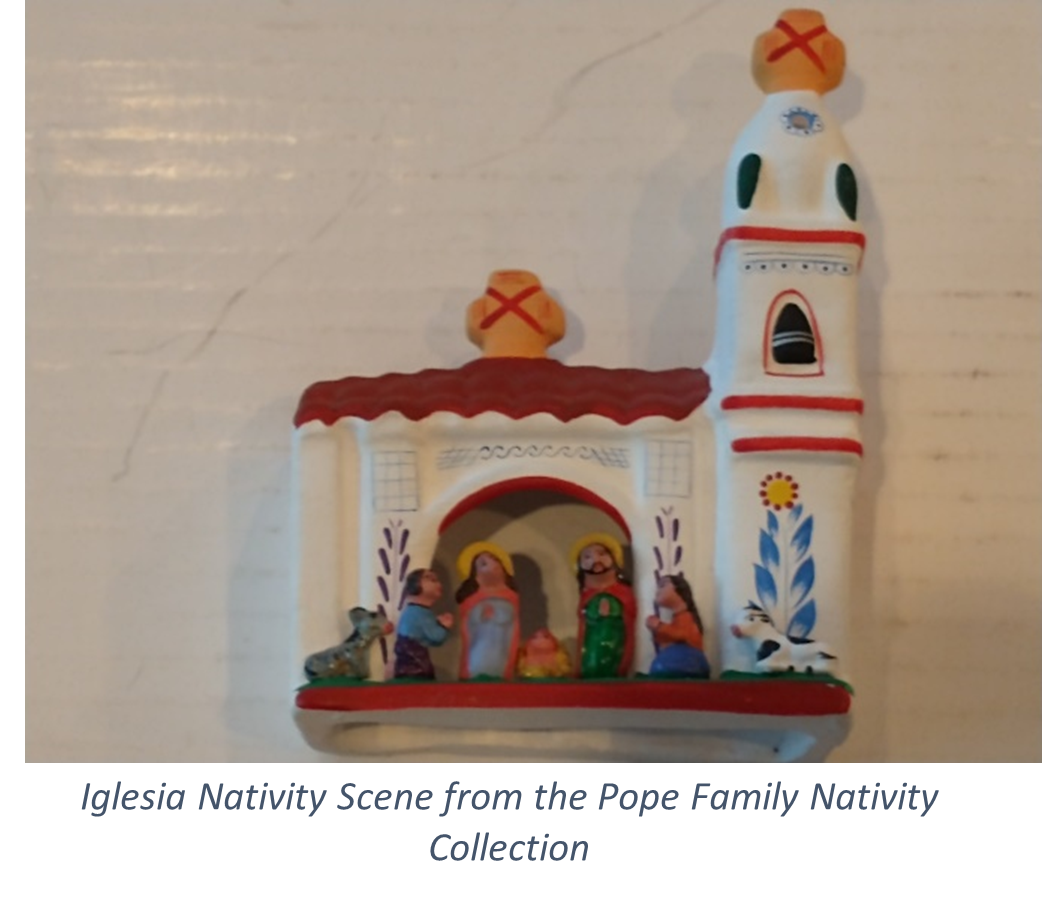
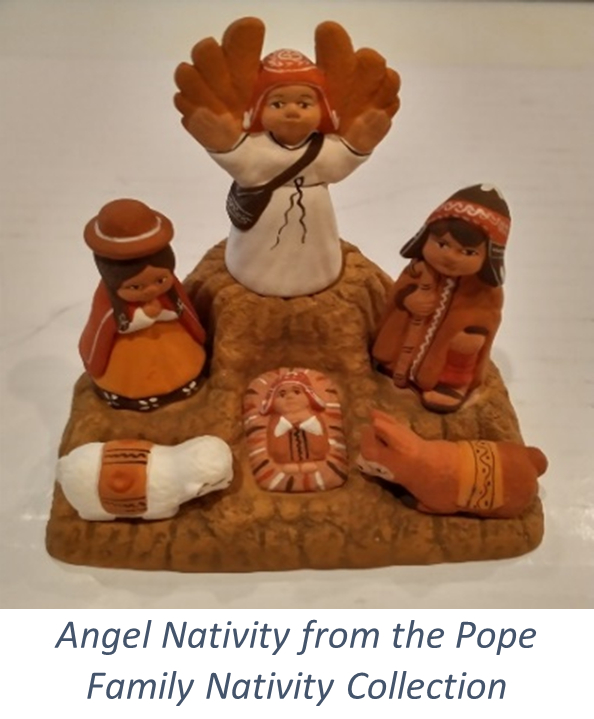
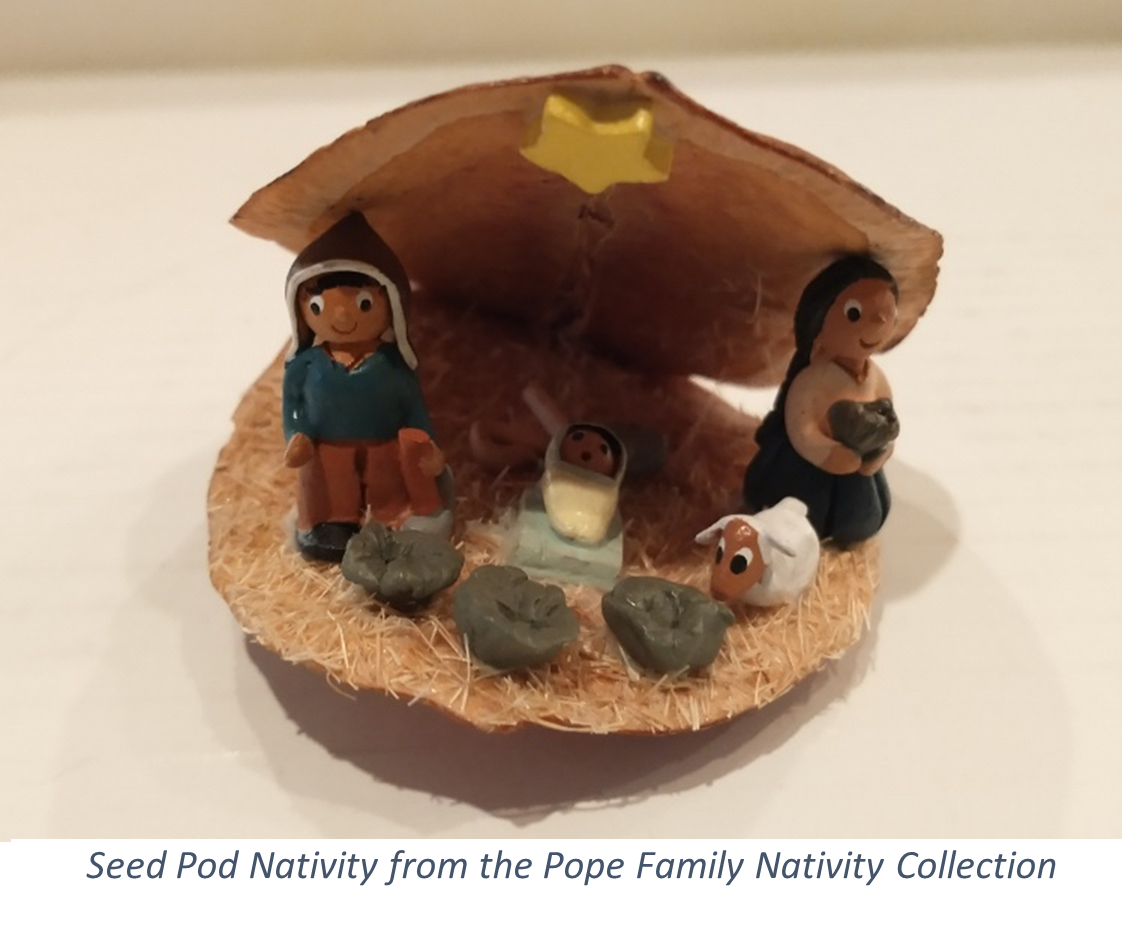
I don’t remember exactly when I became charmed by nativities. I did not grow up in a home that had any, but as my faith grew over the years, they clearly captured my heart and imagination. I began a collection of miniature nativities, easier to store and display than larger ones, and I loved the seeming simplicity of them but also discovered the artistry of their detail in spite of their tiny size.  Many of them picture the nativity setting of another culture and feature materials relating to that culture. One example:  a tiny nativity scene nestled within a dried seed pod ~ I admire the spirit of using what is at hand to showcase the universal blessing of Christ’s birth. One very precious nativity of mine is larger, a pewter cast of an elaborate scene including cherubs and animals crafted in exquisite detail from Bavarian tradition dating back to the 9th century.  I am cheered to see the nativity pictured on ornaments, postage stamps, simple stickers, and crafts, gift wrap, or enacted interactively at our church Breakfast in Bethlehem. These images take us away from the secular and refresh our memories of the precious nature of God’s astonishing gift to all humanity, a baby savior born on that first long-ago Christmas.

SCRIPTURE: John 3:16

MUSIC VIDEO: O Come, O Come Emmanuel

Performed by Enya

Read Full Post »

Reflection on Cattle/Oxen

MEDITATION:

Written by Thomas Smith, a contemporary author.

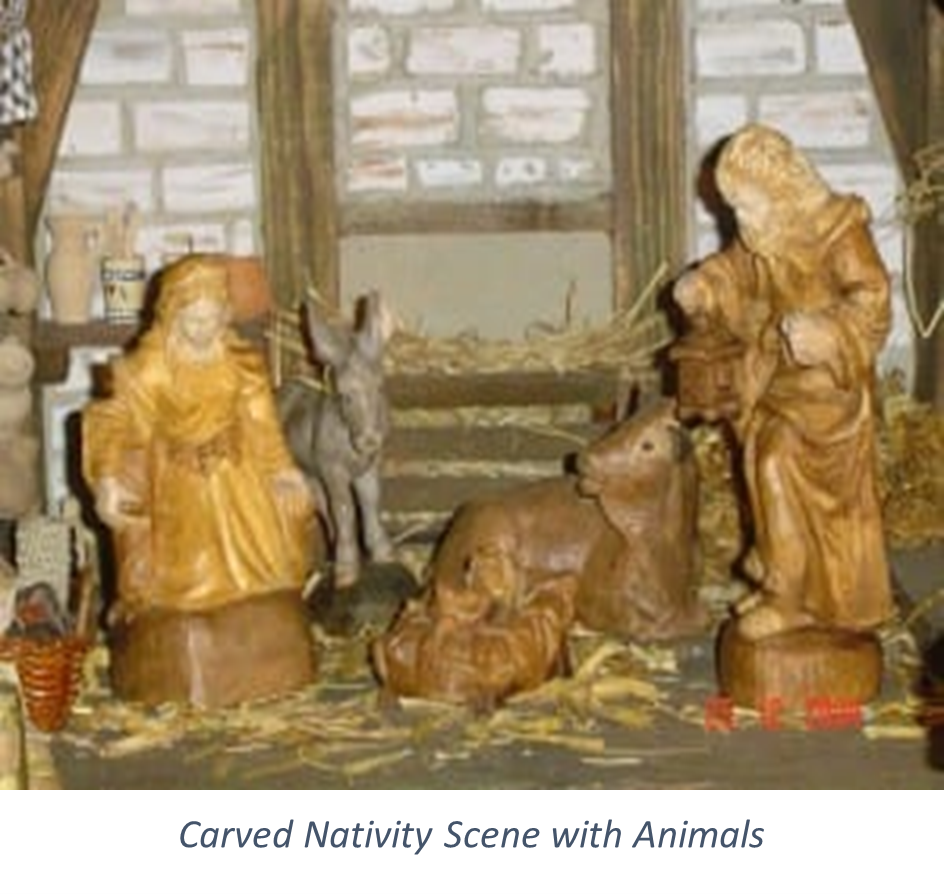
As a young boy, one of my favorite traditions was to help my grandmother set out her porcelain Nativity set on top of her mammoth tv credenza. I especially liked to play with the animals. There was a small lamb, a little cow (ox), and an observant donkey (ass). I’ve never paid much attention to why those particular animals are ubiquitous in every nativity scene. Re-reading the Gospel stories, no animals are mentioned (but the presence of a feeding trough (the manger) makes it a near certainty animals were nearby). The presence of a lamb is a no-brainer, I suppose. Bethlehem was known for its shepherds. The Holy Family is very likely taking shelter in one of the shepherd’s caves that dot the hillsides of Bethlehem even today. It is also a foreshadowing of Jesus’s sacrificial offering as the Lamb of God. But why the ox and ass? While re-reading the Prophet Isaiah (which many early Christians called the Fifth Gospel), my attention was drawn to Isaiah 1:3. One of the images Isaiah uses to show the people’s utter ignorance of God is this, “The ox knows its owner and the ass its master’s crib, but Israel does not know me, my people do not understand.” Early Christian commentators linked this verse to the Nativity. In all the busyness of this time, one of the most beautiful gifts we can offer Jesus is a time of dedicated adoration in your private devotions. The great irony of Isaiah is non-rational animals (the ox and the ass) know their Creator (a term of personal intimacy) and understand who He is, namely their God and Creator but his own people do not. Ask the Lord for the grace to know Him better through these seasons and recognize and discern him more clearly in the ordinary circumstances, conversations, and events you will experience.

SCRIPTURE: Psalm 96

MUSIC VIDEO: The Friendly Beasts

Performed by Garth Brooks

Read Full Post »

Reflection on the Shepherds

MEDITATION:

Written by Susan Smart, a contemporary author, and the owner of the creativebiblestudy.com website.

The shepherds were some of the first entrusted with the Good News that the Savior was born. No, God didn’t choose the rich, the well-educated, the influential.  He chose common shepherds. This just shows me again how great God’s love is for us; He doesn’t want anyone to not hear the Gospel!  It’s not for an elite group; it’s for an elect group – anyone and everyone who believes trusting Jesus as our Savior…our Shepherd.

A good shepherd lays down his life, he cares for the sheep, he protects the sheep, he gathers the sheep, he knows his own sheep. Think about the many ways God has cared for you today. He knows everything about each of us and still cares and loves us. He is our protector.  The question is – do we know Him? Jesus says “My own know Me.”  If you don’t know Jesus, you can! You do not have to be a lost sheep wandering all by yourself. The Good Shepherd has come searching for you to make you His own. Let’s be like the shepherds from that first Christmas night and share the Good News that Jesus, the Son of God, has come to save and give life. Hope is found in Him! Keep your eyes open during this Christmas season for shepherds and let them remind you of this Christmas devotion and how much the Good Shepherd loves you!

SCRIPTURE: Luke 2:15; 17-20

MUSIC VIDEO: Go Tell it on the Mountain

Performed by Anthem Lights

Read Full Post »

Reflection on Sheep

MEDITATION:

Written by Kim Endraske, a contemporary author.

Sheep need a good shepherd. They are easy targets for wolves because they are fearful. They are easily led astray because they are quick to follow one another. They are easily encumbered by their thick fleece. Sheep need a good shepherd to show them where to find fresh, safe food, water, and shelter. Sheep need a good shepherd to protect them from stumbling or being harmed by a hungry predator. In Psalm 23, King David wrote about God as His loving shepherd. David himself had been a shepherd, faithfully taking care of his father’s sheep, so David understood well how important a good shepherd was to the life of the sheep. How comforting to know that God Himself guides us, restores us, provides for us, comforts us and walks with us every single day like the very best shepherd! God, our good shepherd, promises that we will one day dwell with Him in His eternal home when we place our trust in His Only Son, Jesus Christ. Isaiah, too, described God as a shepherd, caring for His flock, gathering His lambs into His arms, carrying them close to Him and carefully leading those who are with young. Our Father is almighty, but He is also tender. God rules with everlasting power and love. As David and Isaiah described God our Father as the good shepherd, they were also pointing toward the son of God, Jesus, Emmanuel, God with us, who would one day be born as a baby in Bethlehem. Jesus, too, is our good shepherd. Jesus Himself laid down His own life for His sheep. Jesus knows how helpless we are. Jesus knows how easily we go astray. Jesus knows that we need a shepherd to guide us, restore us, provide for us and walk with us. Jesus is our good shepherd. He came to give us eternal life. No one can snatch us out of His hand. Jesus will care for you with his mighty, loving hand. We can trust Him.  Today is a perfect day to thank God for sending us our shepherd, Jesus, to guide us and care for us. Remember … Christmas is all about Jesus! 

SCRIPTURE: Luke 2:8

MUSIC VIDEO: While Shepherds Watched Their Flocks by Night

Performed by Cambridge Choir Of St. John’s College

Read Full Post »

Reflection on the Humble Nativity

MEDITATION:

Written by Laura Metzger

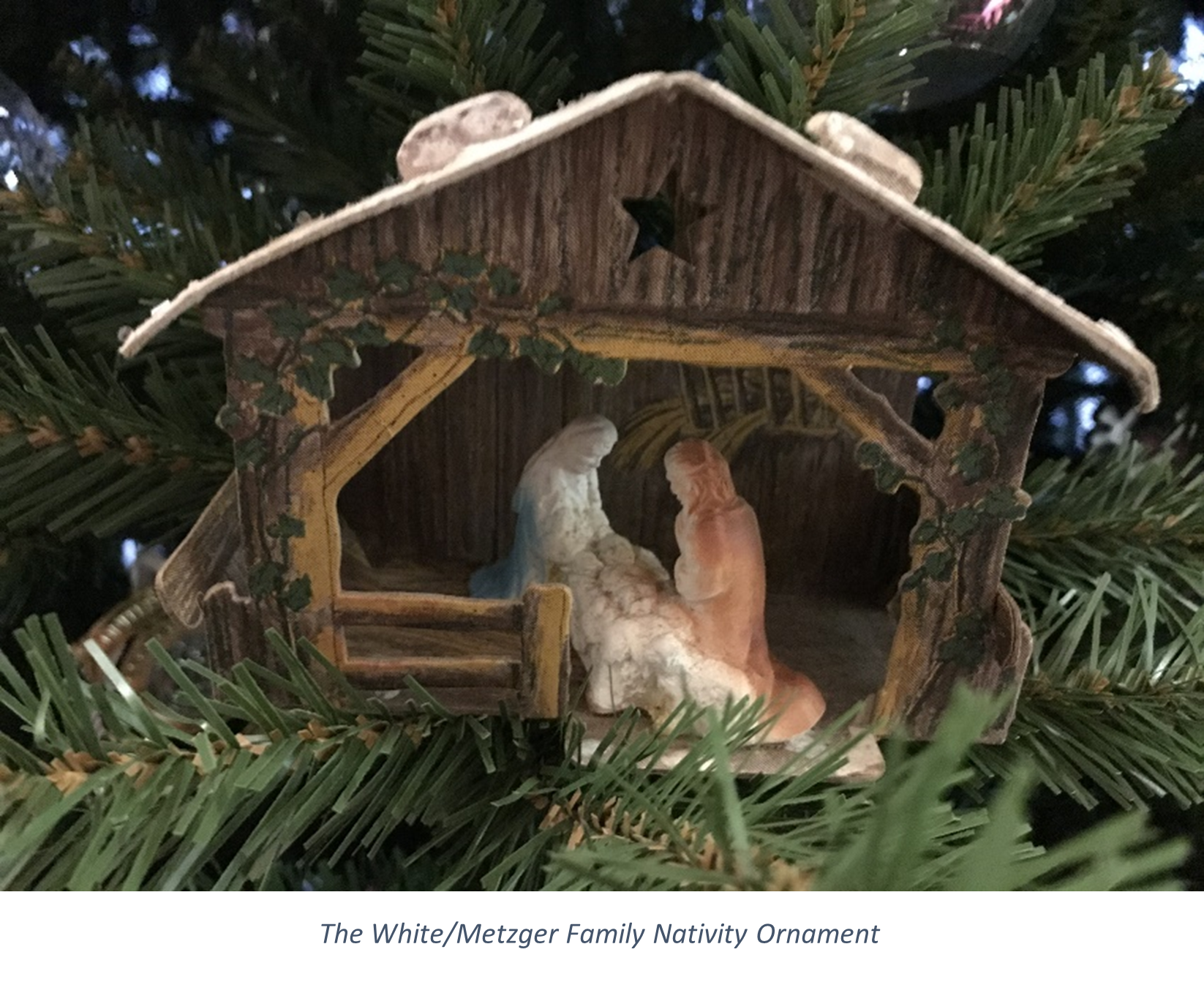
For as long as I can remember, I have had the same nativity scene on my Christmas tree. It was on my parent’s tree for as far back as I can remember, and it has had a special place on our family tree since we were married.  It’s a humble nativity from the 1950s…made of cardboard, with pretty, ceramic figures adoring the Christ child, and with glitter adorning the roof. If positioned just right, a light will shine through the star at the front of the stable. I remember a few of the ornaments that were traditions in our family – a small string of gold paper stars my grandmother made, some ornaments some crafty friends of my mother’s handmade (and are still on my tree today), some pretty glass ornaments I remember always being told to be careful with when we were decorating the tree, a few decorations I received as a child, and this nativity scene. Today the nativity is always put front and center, on our tree. It brings back so many memories of Christmases past, and hope for Christmases to come. It reflects what Christmas is about – God with us in a world where we desperately need him! 

SCRIPTURE: Psalm 24:1-10

MUSIC VIDEO: Away in a Manger

Performed by Paul Wickham

Read Full Post »

MEDITATION:

Written by Max Lucado, a contemporary pastor and author.

Christmas bespeaks of the nativity. And nativity gives occasion to nativity plays…Though each has its own unique wrinkle, they all have some common features: angels with chiffon wings, wise men, and their gifts from afar. A weary innkeeper will turn Mary away. A wide-eyed Joseph will bunch the manger’s hay. And Mary, weary and sweet will say, “I think today.” Beneath a suspended star a baby will be born, the angels will sing, the wise men will kneel, and children of all ages will go home telling their parents that next year they want a part in the nativity play. Little boys want to be Joseph. Little girls want to be Mary. Some want to wear the angel wings or bear gifts from a distant land. A few might even offer to be the hard-hearted Herod or the hassled innkeeper. But no one, ever, as far as I know, volunteers to be the donkey. Which is odd, for what greater honor could exist than to do what the donkey did? He carried Jesus. I know, Joseph is better looking, and Mary is quite stunning. Wise men get the cool hats and angels have the halos. And the donkey? He just stands to the side and chews on hay. But look at him. Do you not see contentment in those big, brown eyes? A look of satisfaction on his face? He just delivered history’s greatest gift! Before Santa had a sleigh or UPS had trucks, God had a donkey. Thanks, in no small part, to him, the choir can sing “For unto us a child is born, unto us a Son is given.” … I’m thinking a donkey at Christmas is a good thing to be. The Christmas donkey did his work. He delivered Jesus so Jesus could be delivered. He plodded. He didn’t gallop or giddy-up. He did what donkeys do. He steadily stepped in the direction the master directed. And, upon arrival, he stepped to the side. He demanded no recognition, expected no compensation. He isn’t even mentioned in the Bible. He was happy to do his job and let Jesus have all the attention. Perhaps we could learn a lesson from the Christmas donkey? There is always a place in the nativity, God’s nativity story, for the person who will plod along expecting no applause, bear up under the weight of the long haul, and carry the One who will carry us all. So, here’s to the donkeys of the story. May your ride be faithful, and your rest be fruitful. And we will do our best to follow your example.

SCRIPTURE: Luke 2:1-5

MUSIC VIDEO: Little Donkey

Performed by The Gunter Kallmann Choir

If using an advent wreath, light the first two purple candles and the third rose-colored candle. This candle symbolizes joy and is called the Shepherd’s Candle. To the shepherd’s great joy, the angels announced that Jesus came for humble, unimportant people like them, too. In liturgy, the color rose signifies joy.

Read Full Post »

« Newer Posts - Older Posts »