Feeds:
Posts
Comments

Archive for October, 2020

The Ending

MEDITATION:

Written by Edward T. Welch, a contemporary Christian counselor and director of the School of Biblical Counseling.

The ending makes all the difference. A tragic story like Shakespear’s Romeo and Juliet starts well, with people full of hope and love, but it ends badly. A comedy like Much Ado About Nothing opens with dark omens and scheming betrayers. The future looks very uncertain but it turns out wonderfully. It is the ending rather than the humor that makes it a comedy.

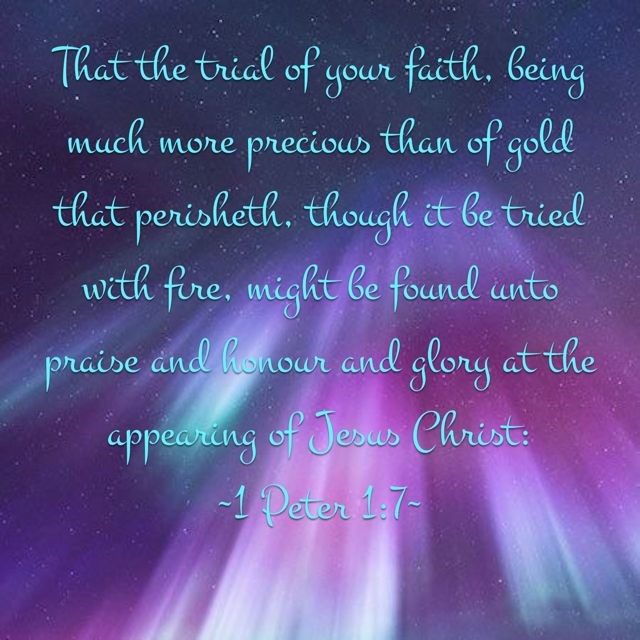
You must decide whether you will live life as a tragedy or a comedy. The story that Jesus offers you is a comedy. Scripture tells you the end, and, if you have put your faith in Jesus rather than in yourself, it is your end too. Jesus wins. His justice prevails. His love is seen for what it really is – boundless and irresistible. Our unity with him exceeds our imaginations. We will see that life was much more purposeful than we thought. Everything we ever did by faith—because of Jesus—stands firm and results in “praise, glory and honor when Jesus Christ is revealed.” Knowing this, of course does not blot out sorrow. But knowing the end reveals that sorrow and death don’t win. For those who know Christ, life and joy are the last word.

PRAYER:

This is an Anglican Prayer of Thanksgiving.

Blessed are you, Lord our God.

How sweet are your words to the taste,

sweeter than honey to the mouth.

How precious are your commands for our life,

more than the finest gold in our hands.

How marvelous is your will for the world,

Unending is your love for the nations.

Our voices shall sing of your promises

and our lips declare your praise.

Blessed be God, Father, Son and Holy Spirit.

Blessed be God for ever. Amen.
Read Full Post »

MEDITATION:

Written by Scotty Smith is a contemporary pastor. This is an excerpt from his book “Everyday prayers”

In Rome I’ve seen statues of the various gods that filled the temples and lifestyle of that great ancient city. In London I’ve visited the biggest Hindu temple in the city and wandered from station to station as worshipers offered prayers and gifts to deities that looked so strange to me. In Israel I studied decaying remains of various idols that competed for the worship of the people of God. Idolatry is everywhere because there’s no such thing as a non-worshiper. Yet, to keep myself from idols requires so much more than simply staying away from ancient sites, pagan temples, and man-made idols. I’ve never been more aware of the invisible pantheon of idols that are constantly angling and clamoring for my heart’s worship. How I wish that as soon as I was placed in Christ my struggle with idolatry would have ceased. That’s simply not the case.

God, Sometimes the approval or rejection of people has more sway over my heart than what you think about me. Sometimes my need to be right is more compelling to me than being righteous in Christ. Sometimes my desire to be in control of people and circumstances claims much more of my time and energy than seeking your face, savoring your grace, and serving your Son—the true King. These are just a few of the things that bear the marks of idolatry in my heart.

PRAYER:

Written by Scotty Smith, author of today’s meditation.

Have mercy on me, Father, and free my foolish heart from giving anything or anyone the attention, allegiance, affection, and adoration you alone deserve. The fact that I’m one of your “dear children” – forgiven, secure, righteous, and beloved in Christ – should be all the motivation I need to keep myself from any form of idolatry. May the gospel of your grace relentlessly expose and dethrone all “empty nothings” from my heart. I pray in Jesus’ most worthy name. Amen.

Read Full Post »

Contentment and Grace

MEDITATION:

Written by Paul David Tripp, a contemporary pastor and Christian author. This is an excerpt from his book “New Morning Mercies: A Daily Gospel Devotional.”

Sin does two very significant things to us all. First, it causes us all to insert ourselves into the center of our worlds, making life all about us. In our self-focus, we are all too motivated by our wants, our needs, and our feelings, and because we are, we tend to be more aware of what we don’t have than of the many wonderful blessings that we have been given. But there is more; because we are self-focused, we tend to be scorekeepers, constantly comparing our piles of stuff to the piles of others. It’s a life of discontentment and envy. Envy is always selfish.

There is a second thing of equal significance that sin does to us. It causes us to look horizontally for what can only be found vertically. So we look to creation for life, hope, peace, rest, contentment, identity, meaning and purpose, inner peace, and motivation to continue. The problem is that nothing in creation can give you these things. Creation was never designed to satisfy your heart. Creation was made to be one big finger pointing you to the One who alone has the ability to satisfy your heart. Many people will get up today and in some way will ask creation to be their savior, that is, to give them what only God is able to give. When you are satisfied with the Giver, because you have found in him the life you were looking for, you are freed from the ravenous quest for satisfaction that is the discouraging existence of so many people., Yes, it is true that your heart will rest only ever when it has found rest in Him. 

One of the most beautiful fruits of grace is a heart that is content, more given to worship than demand and more given to the joy of gratitude than the anxiety of want. It is grace and grace alone that can make this kind of peaceful living possible for each of us. Won’t you reach out today for that grace?

PRAYER:

Written by Robert Hawker (1753-1827), a popular Anglican  preacher, poet, and author.

I come now for large supplies of your grace, mercy, pardon, and peace. I seek you, Jesus — you yourself, with your gifts, with all your fullness and all your blessings.And I am sure if you will give me as large a hand to receive as my Lord’s hand is to give, I will be blessed. Amen.

Read Full Post »

Praying in the Power Pit

MEDITATION:

Written by J. Stephen Lang, a contemporary Christian author. This is an excerpt from his book “The Christian History Devotional.”

What would you say if you had two minutes to address a room full of the most powerful politicians in America? That question must have occurred many times to Peter Marshall, one of the most quoted preachers of his day. Born in 1902 in Scotland, Peter arrived in America when he was twenty-four. He made friends at a church who financed his education at a seminary in Atlanta, was ordained, and served a small church. He moved back to Atlanta to pastor another church  and met his future wife, Catherine Wood (who, as Catherine Marshall, became a noted Christian author). In 1937 he was called to be the pastor of the “power church,” New York Avenue Presbyterian in Washington, with its pews full of political VIPs. Marshall’s sermons drew crowds and were often reprinted in Reader’s Digest and The New Yorker.

The US Senate asked Marshall to serve as its chaplain, a position he assumed on January 4, 1947. The chaplaincy was mostly ceremonial, consisting of the chaplain opening each day’s session with a prayer. Marshall saw this mere formality as a means of speaking truth to the powerful. In one of his first prayers in the Senate chamber, he prayed, “We are at cross-purposes with each other. Take us by the hand and help us see things from Thy viewpoint.” Marshall’s prayers were collected and published as Mr. Jones, Meet the Master.  Peter with his Scot’s accent, oozed charm and warmth. He had a contagious zest for life, which helped to draw young people to his church. He packed a great deal of living and life-changing influence into a few years. Peter had a heart attack, then a second, and died January 26, 1949, at the age of 46. His widow published his story as A Man Called Peter.

PRAYER:

This is an old Welsh prayer for peace.

As we go: take Jesus in our hearts to offer His love to the loveless; take God in our minds to speak the name of peace to the restless; take the Holy Spirit into our lives  to live in Her power, for the sake of all our human family. Amen.

Read Full Post »

Spiritual Formation

MEDITATION:

Written by Bill Gaultiere, a contemporary psychologist and spiritual formation pastor to pastors. This is an excerpt from his Soul Shepherding blog.

Dallas Willard defines spiritual formation for the Christ-follower as, “The Spirit-driven process of forming the inner world of the human self in such a way that it becomes like the inner being of Christ himself.”  Notice that spiritual formation focuses on the Spirit of Jesus shaping our inner being. Your thoughts, feelings, motives, choices, body, and relational connections all need to be re-formed by grace. Jesus says we’re called to love God with all our heart, soul, mind, strength, and relationships. There are more dynamics involved in human flourishing and social justice (or not) than to just believe and do what’s right, as is often taught. The pandemic has revealed what has been forming people on the inside for months and years prior. Under stress, their previously developed attitudes, emotional postures, relational alliances, patterns of choice, and bodily habits take over. Most of this is unconscious. To love others like Jesus does, we need to bring our whole self to him in a process of training. We’re spending time with him in an emotionally honest relationship, confessing our hurts and short-comings, and absorbing his mercy and teaching.

Jesus’ first followers suffered from injustice, abuse, and divisiveness. They were not racist, raging, abusing alcohol, or overwhelmed with fear like so many people today in the pandemic. They were loving to all people, including different ethnic groups and their enemies. How did they do this? How did they keep blessing those that cursed them? They trained with the Master to learn his easy yoke way of doing hard things. They developed heart habits of enjoying God’s loving presence and sharing his love with others. Jesus is inviting you to train with him when he says, “I see how tired you are. I have a tender heart for you. Come get into the grace-yoke with me. Let’s pull the plow across the field together so we can harvest crops of love and peace to feed hungry people.  We learn the easy yoke way of Jesus through engaging in a strategic mix of spiritual disciplines like Bible study, quiet prayer, serving others, and soul talk with friends.

PRAYER:

Written by John Henry Newman (1801-1890), an English theologian, poet and priest.

Help me spread your fragrance everywhere I go — let me preach you without preaching, not by words but by my example — by the catching force, the sympathetic influences of what I do, the evident fullness of the love my heart bears to you. Amen.

Read Full Post »

Compound Interest

MEDITATION:

Written by C.S. Lewis (1898-1963), a British writer, professor, and lay theologian. This is excerpted from his book “Mere Christianity.”

Though Christian charity sounds a very cold thing to people whose heads are full of sentimentality, and though it is quite distinct from affection, yet it leads to affection. The difference between a Christian and a worldly man is not that the worldly man has only affections or “likings” and the Christian has only “charity.” The worldly man treats certain people kindly because he “likes” them: the Christian, trying to treat every one kindly, finds himself liking more and more people as he goes on—including people he could not even have imagined himself liking at the beginning.

This same spiritual law works terribly in the opposite direction. The Germans, perhaps, at first ill-treated the Jews because they hated them; afterwards they hated them much more because they had ill-treated them. The more cruel you are, the more you will hate; and the more you hate, the more cruel you will become—and so on in a vicious circle forever. 

Good and evil both increase at compound interest. That is why the little decisions you and I make every day are of such infinite importance. The smallest good act today is the capture of a strategic point from which, a few months later, you may be able to go on to victories you never dreamed of. An apparently trivial indulgence in lust or anger today is the loss of a ridge or railway line or bridgehead from which the enemy may launch an attack otherwise impossible.

PRAYER:

From the Gelasian Sacramentary, a book of Christian liturgy, which is the oldest western liturgical book that has survived.  The book is linked to Pope Gelasius I. It was compiled near Paris around 750.

O God,

you divide the day from the night.

Give us hearts and minds

unshadowed by the gloom of evil,

that we may think continually upon things

that are good and wholesome,

and be always pleasing in your sight;

through Jesus Christ our Lord. Amen.

Read Full Post »

Knowing God

MEDITATION:

Written by Gary Inrig, a contemporary pastor and Christian author. This is excerpted from his book “The Parables Understanding What Jesus Meant.”

A.W. Tozer begins his masterly study of the character of God, The Knowledge of the Holy, with a provocative sentence: “What comes into our minds when we think about God is the most important thing about us.” For some, such a claim seems to be pious rhetoric, the kind of thing a preacher is expected to say on Sunday morning. The agenda of modern secular man has little place for God. I remember a philosophy student insisting to me that life’s really important questions weren’t about God at all, but to such things as the nuclear issue, environmental crises, economic dislocation, political upheaval, and personal matters of self-worth and personal dignity.

For others, Tozer’s words have a ring of truth. What I think about God is important. In fact, those other questions can only be answered in the light of who He is and what He says. But that creates a dilemma. In the theological cafeteria of the 20th century, which God should I choose? Or should I build my own God a la carte, combining ideas that seem to me to be palatable and appealing? From where do I get my understanding of God?  I have no doubt that the Lord Jesus would have agreed with Tozer emphatically. What enters our minds when we think about God really is the most important thing about us. Over and over, Christ sought to scrape away the residue of misinformation and misunderstanding that obstructed people’s view of His Father.  But He also makes it clear that knowledge of God is not equivalent to theological orthodoxy, important as that is. The evidence that we know God is not so much our ability to define the divine attributes, as it is our response to people. Right knowledge of God is present when we imitate our Father’s response.

PRAYER:

Written by Irenaeus of Lyons (130-202), Greek bishop noted for his role in expanding and guiding Christian communities in what is now the south of France.

I appeal to you, Lord, God of Abraham, God of Isaac, God of Jacob and Israel, You the Father of our Lord Jesus Christ. Infinitely merciful as You are, it is Your will that we should learn to know You. You made heaven and earth, You rule supreme over all that is. You are the true, the only God; there is no other god above You.  Through our Lord Jesus Christ…and the gifts of the Holy Spirit, grant that all who read what I have written here may know You, because You alone are God; let them draw strength from You; keep them from all teaching that is  heretical, irreligious or godless. Amen.

Read Full Post »

Grace

MEDITATION:

Written by Michelle Lee-Barnewall, a contemporary professor of biblican and theological studies and Christian author. This is excerpted from her book “Surprised by the Parables.”

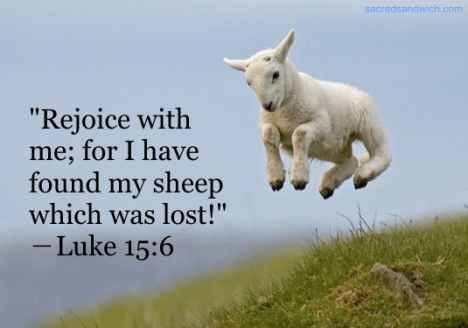
In the parables of the lost sheep and the lost coin (Luke 15:1-10), it does not really matter how the sheep and the coin were lost or how lost they were. What matters is that someone comes to find what is lost, and there is great joy at the finding. While we tend to focus on our sin, Jesus challenges us to focus on God and remember the grace he has given us. We can see God as someone who eternally calculates our flaws and how short we have fallen from what is demanded, or we can see God as the one who pursues us valiantly and is filled with joy when he finds us. When we see sin in ourselves and others, we can hide, deny, and condemn, or we can open our hearts so we can be found. God constantly offers grace, but what also matters is how we respond and receive it and the one who offers it to us.

PRAYER:

This prayer is from the “Carmina Gadelica,” six volumes of prayers, hymns, blessings, songs, proverbs and literary folkloric poems from the Gaelic speaking regions of Scotland.  Compilation of the works began by Alexander Carmichel between 1860 and 1909.

God, bless to me this day,

God, bless to me this night;

Bless, O bless. Thou God of grace,

Each day and hour of my life;

Bless, O bless. Thou God of grace.

Each day and hour of my life.

God, bless the pathway on which I go,

God, bless the earth that is beneath my sole;

Bless, O God, and give to me Thy love,

O God of gods, bless my rest and my repose;

Bless, O God, and give to me Thy love,

And bless, O God of gods, my repose. Amen.

Read Full Post »

Compassion

MEDITATION:

Written by Henri J. M. Nouwen, (1932-1996) was a Dutch priest, professor, writer and theologian. This is an excerpt from his book “Thomas Merton: Contemplative Critic.”

Here we have come back to the compassion that must be formed in one’s heart, a compassion that comes out of a deep experience of solidarity, in which one recognizes that the evil, sin, and violence which one sees in the world and in the other, are deeply rooted in one’s own heart. Only when you want to confess this and want to rely on the merciful God who can bring good out of evil are you in a position to receive forgiveness and also to give it to other men and women who threaten you with violence. Precisely because Merton had discovered this nonviolent compassion in his solitude could he in a real sense be a monk, that is to say, one who unmasks through his criticism the illusions of a violent society and who wants to change the world in spirit and truth.

PRAYER:

This prayer is from the Common Service Book of the Lutheran Church, originally  issued in 1917.

Lord God, heavenly Father,

because of our many sins

we deserve no peace,

but in your mercy, spare us.

Stop or hinder those who plan evil.

Restrain all violence

and anything that would harm us.

Protect your people.

Correct the wayward.

Heal the hurting.

Grant us peace. Amen.

Read Full Post »

When in Doubt

MEDITATION:

This Meditation is from the Lead Like Jesus Devotional blog.  The Lead Like Jesus organization was cofounded by Ken Blanchard and Phil Hodges.

Leading like Jesus doesn’t mean we always know what to do. Discerning the path forward frequently requires multiple considerations, some of which are not readily clear. Jesus modeled for His disciples a constant turning to the Father as He navigated the ups and downs of life. When He needed to select key leaders, He spent the night in prayer. After a long day of ministry, He stayed up late or woke up early to spend time with the Father. When in doubt, when pressure mounts, when you need to find a way forward, follow Jesus’ example, and turn to the Father.

PRAYER:

From the Gregorian Sacramentary, A 10th century illuminated Latin manuscript ascribed to Gregory 1.

O Lord, we beseech You  mercifully to receive the prayers of Your people who call upon You; and grant that they may both perceive and know what things they ought to do, and also may

have grace and power faithfully to fulfill the same; through Jesus Christ our Lord. AMEN.

Read Full Post »

« Newer Posts - Older Posts »