Feeds:
Posts
Comments

Confessing our sins can be a challenge – when we confess we are vulnerable; we are proud and often reluctant to admit our own errors; we often fear the change required to repent from our sins.  Richard Foster states:  “Confession is a difficult discipline for us because we all too often view the believing community as a fellowship of saints before we see it as a fellowship of sinners. We feel that everyone else has advanced so far into holiness that we are isolated and alone in our sin. We cannot bear to reveal our failures and shortcomings to others. We imagine that we are the only ones who have not stepped on to the high road to heaven. Therefore, we hide ourselves from one another and live in veiled lies and hypocrisy.”

The sins we try to hide from, however,  are usually the ones that have the most power over us. Our hiding prevents us from trusting relationships with God and with each other.  We need to be honest, both individually and as a Christian community, and acknowledge that we are all sinners.  Confessing allows us to better understand our God and connect with Him and with one another.  Through confession, we can respond to God’s abundant love and forgiveness and we can be a trusting discipleship community where we walk together in our journey with Jesus.  Confession is a means of healing and can transform our spirit.  Through confession we can replace guilt with forgiveness, can recognize our sin and turn from it.  Through confession we can experience the grace of God and build up each other.  By recognizing areas of sin in our lives we can build relationships of trust that allow us to work together as disciples to repent and change.

Psalm 51

Have mercy on me, O God, according to your unfailing love; according to your great compassion blot out my transgressions. Wash away all my iniquity and cleanse me from my sin.  For I know my transgressions, and my sin is always before me.  Against you, you only, have I sinned and done what is evil in your sight; so you are right in your verdict and justified when you judge. Surely I was sinful at birth, sinful from the time my mother conceived me. Yet you desired faithfulness even in the womb; you taught me wisdom in that secret place.

Cleanse me with hyssop, and I will be clean; wash me, and I will be whiter than snow. Let me hear joy and gladness; let the bones you have crushed rejoice. Hide your face from my sins and blot out all my iniquity. Create in me a pure heart, O God, and renew a steadfast spirit within me. Do not cast me from your presence  or take your Holy Spirit from me. Restore to me the joy of your salvation and grant me a willing spirit, to sustain me.

 Then I will teach transgressors your ways, so that sinners will turn back to you. Deliver me from the guilt of bloodshed, O God, you who are God my Savior, and my tongue will sing of your righteousness. Open my lips, Lord, and my mouth will declare your praise. You do not delight in sacrifice, or I would bring it; you do not take pleasure in burnt offerings. My sacrifice, O God, is a broken spirit; a broken and contrite heart you, God, will not despise. May it please you to prosper Zion, to build up the walls of Jerusalem. Then you will delight in the sacrifices of the righteous; in burnt offerings offered whole; then bulls will be offered on your altar.

Confess

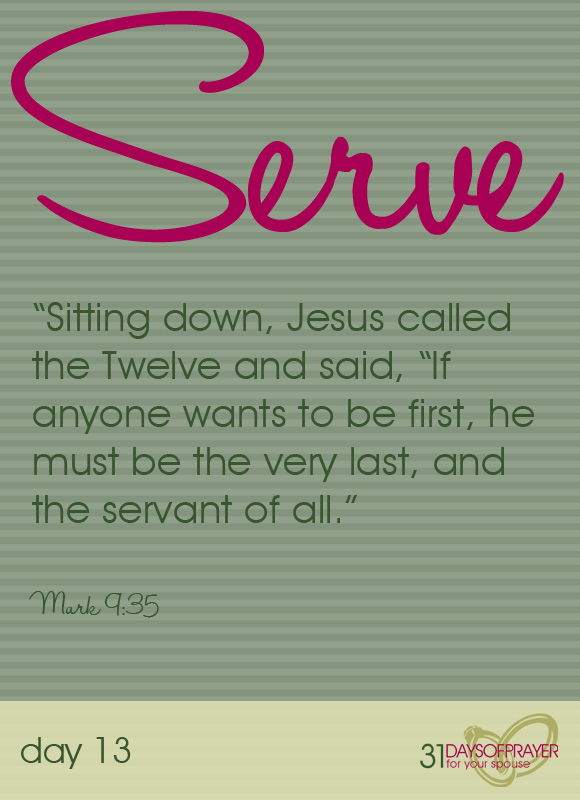
The Discipline of Service

Throughout Scripture, Jesus demonstrates what it looks like to be a servant.  Throughout his ministry, Jesus models servant hood that is full of humility, love and devotion to God.  John 13:1-17, where Jesus washes the feet of the disciples is probably the most common passage demonstrating the importance of service .  The discipline of service is not only about taking part in organized service activities, but is a way of transforming our lives to be a servant in all the events of life. Richard Foster, in his book Celebration of Discipline, states that “Service is not a code of ethics, but a way of living.”  Foster suggests the following acts of services that we can make a part of our daily life to cultivate the discipline of service:

  • The service of hiddenness-doing that which remains unknown to others.
  • The service of small things-simple assistance of another in what we identify as external matters.
  • The service of guarding the reputation of others-promoting love, protecting words (Titus 3:2).
  • The service of allowing others to serve us– It is an act of submission and service to let others serve us (note Peter and Jesus discussion in John 13 about being washed).
  • The service of common courtesy toward one another – The service of ungrudging hospitality (1 Peter 4:9).  There is a desperate need today for Christians who will open their homes to one another.
  • The service of listening intently to another – “The first service that one owes to others in the fellowship consists in listening to them. Just as love to God begins with listening to His Word, so the beginning of love for the brethren is learning to listen to them. The most important requirements are compassion and patience. We do not have to have the correct answers to listen well. In fact, often the correct answers are a hindrance to listening, for we become more anxious to give the answer than to hear. -Foster
  • The service of bearing each other’s burden(Galatians 6:2). – True service builds community. It draws, binds, builds and heals.
  • The service of bringing a word from God to another – Speaking truth in love to those around you. (Ephesians 4:15)

To cultivate the discipline of service, a starting point is to ask the simple question:  “What does service look like in my daily life?”  As we think about this question we will begin to see more people we can serve and see opportunities where we can glorify God by helping others.

Serve

One of the most prominent features of the early church was Christian Fellowship.  Christians are intended to do things together.  We assemble together for worship and we spend time together in study, prayer and song.   As we meet together in fellowship, we get to know each other, we strengthen each other and we care for each other. Our faith is strengthened through fellowship.  Fellowship allows us to break down our cultural and natural inclination for self-centeredness and allows us to form meaningful and trusting relationships with other Christians.  We learn to build each other up and to disciple each other.  The Biblical calls us to fellowship:

  • To care for one another [1 Corinthians 12:26: If one part suffers, every part suffers with it; if one part is honored, every part rejoices with it.]
  • To teach and admonish one another [Colossians 3:16: Let the message of Christ dwell among you richly as you teach and admonish one another with all wisdom through psalms, hymns, and songs from the Spirit, singing to God with gratitude in your hearts.]
  • To serve one another in love [Galatians 5:13: You, my brothers and sisters, were called to be free.But do not use your freedom to indulge the flesh; rather, serve one another humbly in love.]
  • To pray for one another [James 5:16: Therefore confess your sins to each other and pray for each other so that you may be healed. The prayer of a righteous person is powerful and effective.]
  • To restore one another [James 5:19-20: My brothers and sisters, if one of you should wander from the truthand someone should bring that person back,  remember this: Whoever turns a sinner from the error of their way will save them from death and cover over a multitude of sins.]
  • To be hospitable to one another [1 Peter 4:9: Offer hospitality to one another without grumbling.]

God is a relational God and He wants us to form a relationship with Him and with each other.  Through the discipline of fellowship, we experience God  together so we can look beyond just ourselves and grow in grace and godliness as the disciples Christ call us to be.  Every time we gather together we have an opportunity to experience the fellowship God intended for us to enjoy.

Acts2_42

The Discipline of Prayer

According to Dr. Richard Krejcir, “The Discipline of Prayer is the intimate pursuit and practice of the personal communication we have available between God and us. It is the spoken and unspoken confession of our Christian faith by engaging and proclaiming our complete dependence upon Christ as Lord over our lives. Prayer is not just a selfish wish list to get God to cater to our needs and whims; rather, it’s true purpose and the reason it is also a discipline is to shape us by what He has revealed, and to grow in faith, character, perseverance, and maturity. Prayer is meant to line us up in Christ and to conform us to Him, so it builds us up in Him. It makes us willing and able to express praise, worship, seek forgiveness from God, become more sensitive, confess sins, make petitions for one another, and help others to be shaped, too.”

Our prayer, as modelled in The Lord’s Prayer, should contain the elements of worship and praise to God, Confession, Thanksgiving and Petition (where we bring our requests to God).  Petition is a component of our prayers, but is only one of the components.

We are promised that God hears our prayers, that the Holy Spirit is available to us through prayer, and that God showers His grace upon us through prayer.  Prayer that includes praise and thanksgiving keeps us humble as we remember the majesty and power of our Lord.   As we build a disciplined prayer life our knowledge and understanding of our God deepens and matures.  As we become more disciplined, prayer can become an unceasing communication with God throughout our day as we:   “Rejoice always,  pray continually, give thanks in all circumstances; for this is God’s will for you in Christ Jesus.”  [1 Thessalonians 5:16-18].

prayer

Silence is the simple stillness of the individual under the Word of God. We are silent before hearing the Word because our thoughts are already directed to the Word, as a child is quiet when he enters his father’s room. We are silent after hearing the Word because the Word is still speaking and dwelling within us. We are silent at the beginning of the day because God should have the first word, and we are silent before going to sleep because the last word also belongs to God. – Dietrich Bonhoeffer

When we practice the discipline of solitude and silence we can begin to experience what it feels like to be near to God.  Begin by finding somewhere to find solitude when reading/hearing scripture or a enjoying a devotional reading.  You might listen to a Bible passage on a walk or while watching a sunrise.  You might have a special chair or desk where you retreat from your busy-ness and spend some time with Jesus. Take just a few moments before you end your devotional time, begin your day or end your day to release control, and contemplate God and the message He has for you. Perhaps awkward at first, we will find that we can increase our intimacy with Christ and begin to celebrate Christ’s fullness and goodness through the spiritual discipline of silence and solitude.

solitude

Happy Valentines Day

Love

As Dallas Willard states in his book The Great Omission:  “Practicing the presence of God is the fundamental secret to directing and redirecting our minds constantly to Him.   In the early time of our practicing, we may well be challenged by our burdensome habits of dwelling on things less than God.  But these are habits that can be broken.  A new, grace-filled habit will replace the former ones as we take intentional steps toward keeping God before us.”

Thomas Watson (a Puritan from the 1600s) wrote:  “The first fruit of love is the musing of the mind upon God.  He who is in love, his thoughts are ever upon the object.  He who loves God is ravished and transported with the contemplation of God…God is the treasure, and where the treasure is, there is the heart.  By this we may test our love to God.  What are our thoughts most upon?  Can we say we are ravished with delight when we think on God?  …Do we contemplate Christ and glory? A sinner crowds God out of his thoughts.  He never thinks of God, unless with horror, as the prisoner thinks of the judge.”

Where do our thoughts take us throughout the day?  What disciplines can we put into practice that will help us make living in the presence of God a habit?  Share any practices you have found that helps you on this journey.  Success transforms our lives.

Psalm 16

The God Who Blesses You

Make sure you don’t forget God, your God, by not keeping his commandments, his rules and regulations that I command you today. Make sure that when you eat and are satisfied, build pleasant houses and settle in, see your herds and flocks flourish and more and more money come in, watch your standard of living going up and up—make sure you don’t become so full of yourself and your things that you forget God, your God,

the God who delivered you from Egyptian slavery;
the God who led you through that huge and fearsome wilderness,
those desolate, arid badlands crawling with fiery snakes and scorpions;
the God who gave you water gushing from hard rock;
the God who gave you manna to eat in the wilderness, something your ancestors had never heard of, in order to give you a taste of the hard life, to test you so that you would be prepared to live well in the days ahead of you.

 If you start thinking to yourselves, “I did all this. And all by myself. I’m rich. It’s all mine!”—well, think again. Remember that God, your God, gave you the strength to produce all this wealth so as to confirm the covenant that he promised to your ancestors—as it is today.  

— Deuteronomy 8:11-16 (The Message)

God Blesses

Glorify God

This devotional from Presbyterian Church Canada was very applicable to our WEBS study this week — God’s timing is impeccable!

What do we do when God answers our prayers? The story of Abraham’s chief servant finding a wife for Isaac has spoken deeply to my heart, as I also hope it will to yours. When he came to Abraham’s country, he prayed:

Genesis 24:12-14a – O Lord, God of my master Abraham, give me success today, and show kindness to my master Abraham. See, I am standing beside this spring, and the daughters of the townspeople are coming out to draw water. May it be that when I say to a girl, “Please let down your jar that I may have a drink,” and she says, “Drink, and I’ll water your camels too” — let her be the one you have chosen for your servant Isaac. (NIV)

God answered his prayer. But when the servant went to Rebekah’s home, what did do?

Genesis 24:33a – Then food was set before him, but he said, “I will not eat until I have told you what I have to say.” (NIV)

How many times have I prayed, and God has graciously answered, and yet I have kept from the world the part that God played in my success? How many times have you done the same? It is not that I do not give glory in my heart to Him for answered prayer. It is not that I do not give glory to Him amidst His people, for I do. Yet, when it comes to people of this world, such testimony is not always received well, and so, sometimes, and perhaps far too often, I have kept the most important part of the story to myself. I do not give the glory to God publicly for fear of offending others or making myself an object of ridicule. And yet, God has said through the apostle Paul:

Romans 10:13-14 – Everyone who calls on the name of the Lord will be saved. How, then, can they call on the one they have not believed in? And how can they believe in the one of whom they have not heard? And how can they hear without someone preaching to them? (NIV)

These verses are meant for all of us as God’s people. Many around us are entrapped in their sin and unbelief, and we hold the key to their freedom through the testimony which God has given to each of us through answered prayer. When we withhold the full story of our success from the world, we also withhold the key to their salvation and freedom in Christ. By telling our story in a quiet and respectful manner, however, we offer to all who listen the opportunity to know God better. Whether those who hear do accept the key we offer through our story is not the point. That choice belongs to them and them alone. The point is that we are to glorify God publicly so that others, indeed, may at least have the choice of salvation set before them. With God’s help, this is something that I am endeavouring to do more often. How about you?

glorify god

— Lynne Phipps (from PresbyCan Devotional)

Remembering God

Remembering is an important concept, mentioned throughout the Bible – in fact there are over 230 references in the Bible that deal with remembering.  The Bible speaks often of God’s faithfulness in remembering His promises to us, of our need to remember God and His promises, and warns us directly of the danger of forgetting the truth.   Remembering is intended as more than just a mental exercise.  Through remembering we are called to appropriate action in our lives and in our worship. What is it that God calls us to remember?

In Deuteronomy we are called to remember our requirements, as a child of God, to hear the Lord, love the Lord, instruct the family, and apply the word of the Lord to our lives.  We must also remember that all we have comes from God, that we own nothing on our own, and that we are here to take care of what belongs to God.

[Hear, O Israel: the Lord our God is one Lord [the only Lord]. And you shall love the Lord your God with all your [mind and] heart and with your entire being and with all your might.  And these words which I am commanding you this day shall be [first] in your [own] minds and hearts; [then] You shall whet and sharpen them so as to make them penetrate, and teachand impress them diligently upon the [minds and] hearts of your children, and shall talk of them when you sit in your house and when you walk by the way, and when you lie down and when you rise up. And you shall bind them as a sign upon your hand, and they shall be as frontlets (forehead bands) between your eyes. And you shall write them upon the doorposts of your house and on your gates. And when the Lord your God brings you into the land which He swore to your fathers, to Abraham, Isaac, and Jacob, to give you, with great and goodly cities which you did not build,  And houses full of all good things which you did not fill, and cisterns hewn out which you did not hew, and vineyards and olive trees which you did not plant, and when you eat and are full.  [Deuteronomy 6:4-11]]

We are also called to remember that our redemption and salvation is from God.   Jesus is the only one worthy to redeem us from our sins.  There is nothing we can do to earn our salvation – it is a gift given to us solely through God’s grace and our resulting faith in Him alone.  In him we have redemption through his blood, the forgiveness of sins, in accordance with the riches of God’s grace [Ephesians 1:7].

We are also called to remember the reward we receive for serving God.  God has promised good:  And you shall do what is right and good in the sight of the Lord, that it may go well with you and that you may go in and possess the good land which the Lord swore to give to your fathers [Deuteronomy 6:18].  Remembering the good work God has done in our lives serves as a reminder of the love He has brought us.  Our memories reveal His presence in our lives – even when we might have missed it at the time and attributed something to our own works or happenstance.  If we remember we can begin to better rely on God now and in the future.   We can serve as a testament to His power and glory.

In our busy lives, don’t forget to remember!  Give thanks that God has brought you to this day.

fb-god-wants-you-to-remember