Feeds:
Posts
Comments

Archive for the ‘Religion’ Category

Reflection on Anna

MEDITATION:

Written by Joye Smith, a contemporary author.

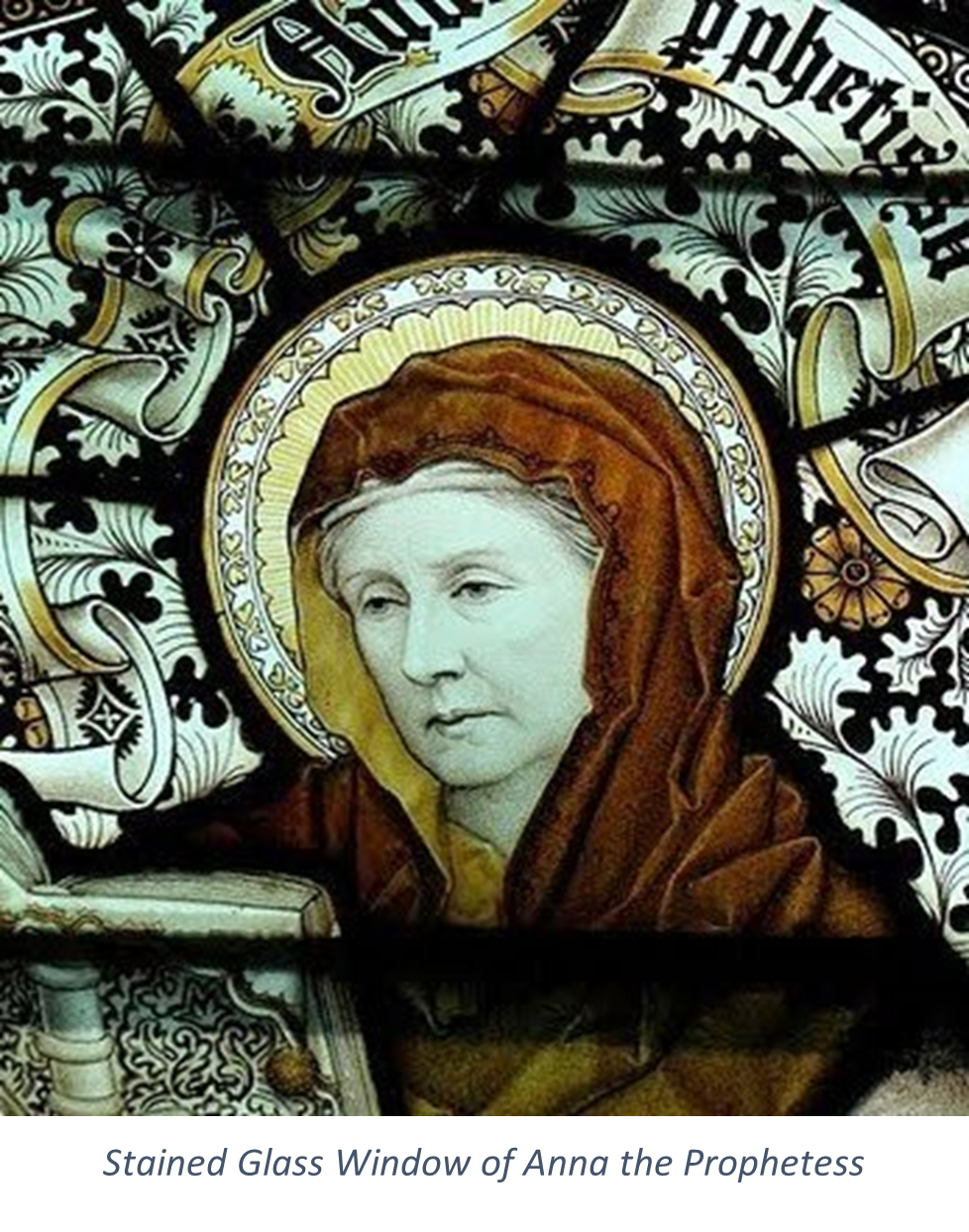
Night after night. Day after day. Anna was there at the temple, worshiping God by fasting and praying. We read of Anna in Luke 2:36-38 as part of the story about baby Jesus when he was presented at the temple at 8 days old. We are told that Anna was a prophetess, and she had been a widow for many years. Night and day she was at the temple, seeking God in prayer. Anna had seen much heartache in her life. She had become a widow as a young woman. She lived in a time when there were many difficulties. I’m sure there were many sleepless nights for Anna, and many days of uncertainty. Yet she continued to cling to God in expectation of redemption. When she saw the baby Jesus, she added her testimony to that of Simeon’s that this child was the One they looked forward to as the Messiah. Anna’s example encourages us to continue seeking God in prayer. Through the sleepless nights and uncertain days. To give thanks to God for His presence in our lives. As we pray, to thank Him that Christ is our Savior and therefore we look forward to eternal life with Him. We must also be relentless in praying for the lost world of our time, praying that people would come to know redemption through Jesus. Keep on praying faithfully. Night after night. Day after day.

SCRIPTURE: Luke 2:36-38

MUSIC VIDEO: Pray

Performed by Sanctus Real

Read Full Post »

Reflection on Simeon

MEDITATION:

Written by James Merritt, a contemporary pastor and host of the television broadcast “Touching Lives.”

An important, yet often-overlooked, person in the story of Christmas was a Jewish man named Simeon.  His name literally means, “God has heard.”  The Holy Spirit had revealed to Simeon that he would see the promised Messiah before his death.  It is important to remember that it had been 400 years since God had spoken to His people through a prophet before Christ was born.  Simeon’s story is one of incredible faith, as he waited and watched with great hope for God to fulfill His promise made long ago to His people Israel, and to him personally. As the months and years went by, Simeon’s faith was not deterred.  His hope was not in circumstances or in man’s calendar, but in a faithful God.  Finally, one day the Holy Spirit prompted Simeon to go to the Temple because today was the day.  On that same day, a young, poor teenage couple walked up the Temple steps to fulfill the Jewish offering for their firstborn son.  That day, faith became sight for Simeon as he took the Christ-child in his arms, lifted Him up, and blessed the Lord for His faithfulness.  The Messiah was here…a Savior not only for the Jews, but also for the whole world.

I find Simeon’s praise to God absolutely incredible.  He referred to Jesus as God’s, “salvation,” which He had, “prepared in the sight of all people.”  What did Simeon mean when he said God had prepared His salvation?  That word in the original language of the New Testament (Greek) came from the Oriental custom at that time of sending people out before a king’s journey to level the roads and make them passable.  God, Simeon announced, had long been preparing His people for the arrival of His Son and the salvation He would bring. It is astounding to see how the road had been made smooth, so to speak, throughout the Old Testament.  The great flood demonstrated God’s wrath towards sin and those who remain in it.  The covenant with Abraham demonstrated God’s desire for His people to rest in Him and trust Him for all their needs.  The giving of the law to Moses showed God’s righteousness, and man’s unrighteousness.  The Tabernacle taught the people that God requires a blood sacrifice for sin.  The Old Testament prophecies foretold the coming of Messiah.  God took every measure necessary to prepare the world for the arrival of His Son, Jesus – the Lamb of God who would bring salvation to everyone who would believe.  And yet, Jesus wasn’t recognized by most as the promised Messiah…until His parents took Him to the Temple where God had prepared one man’s heart to proclaim the glory of His Son. To some, Simeon’s role may seem small and insignificant in the Christmas story, but that is not the case.  Simeon’s example reminds us that if we believe what God has said, and live according to that belief, our lives become a testimony to the character of God, just like Simeon’s.  His life testified to the faithfulness of God.  He kept His promise, not only to Israel, but also to Simeon.  May Christ’s birth remind us that God is faithful.

SCRIPTURE: Luke 2:25-32

MUSIC VIDEO: Simeon’s Song

Performed by Nia Allen and Tommy Walker

Read Full Post »
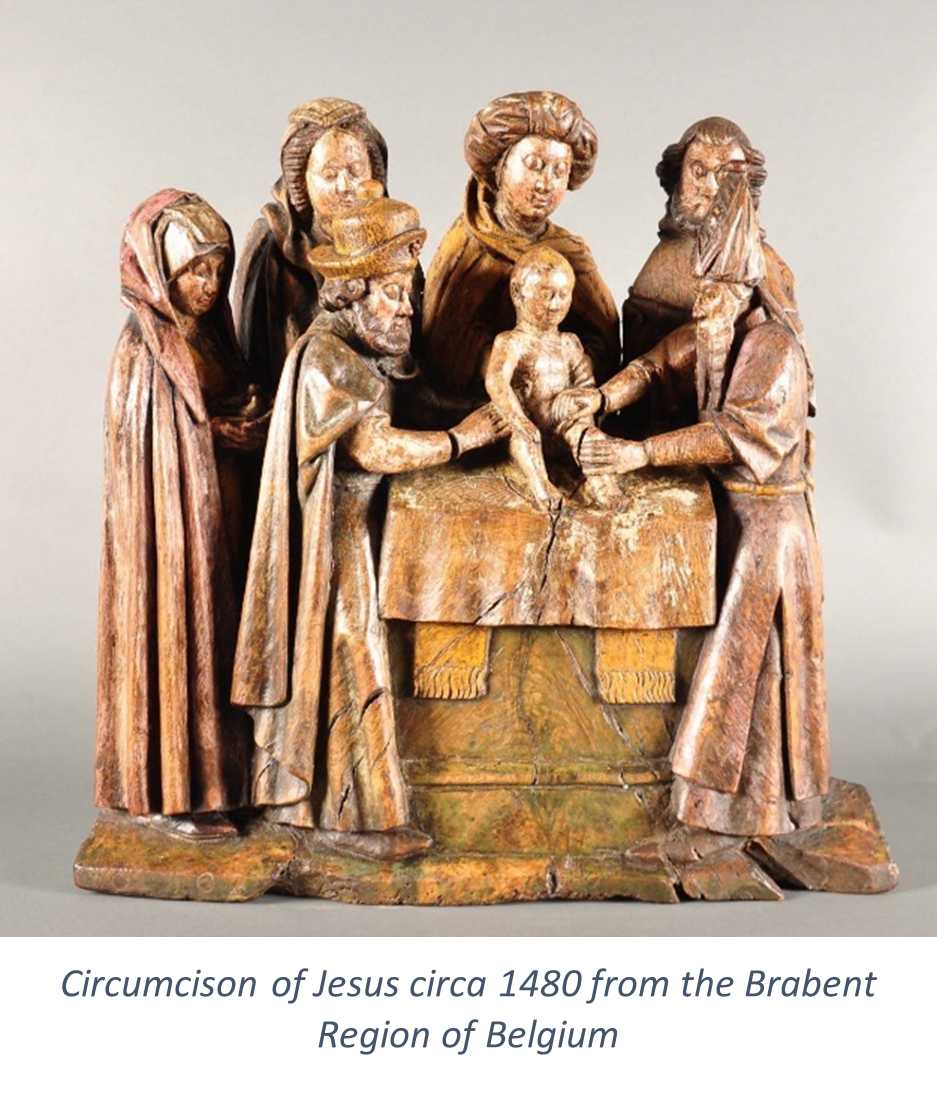
The Feast of the Circumcision of Christ is a Christian celebration of the circumcision of Jesus in accordance with Jewish tradition, eight days (according to the Semitic and southern European calculation of intervals of days) after his birth, the occasion on which the child was formally given his name.

MEDITATION:

Written by R. Fergus Mair, a contemporary writer, educator, and CEO of Clergy Stuff.

Sometimes we want to forget that Jesus was human. We focus on the fact that he was God, fully divine, all-powerful, and transcendent. But Luke’s gospel wants us to understand that not only was Jesus fully human, he was a particular human in a particular community. Jesus was a first-century Jewish male. His parents followed the Jewish laws and traditions of the time.

When he was eight days old, they took him to be circumcised and named. When we are tempted to look only to some distant future paradise with God, Luke’s gospel reminds us to keep our feet firmly where they are. God made us human beings in God’s image, with material bodies that have material needs. When we participate in our own traditional rituals of baptism and communion, singing together, eating together, and being in community, we celebrate the physical, embodied nature of our faith.

Our human bodies are not simply a temporary burden to bear until our souls are freed, but a gift from God, a God who willingly took on a human body in order to be with us. How can I be present in and give God praise for my physical body?

SCRIPTURE: Luke 2:21-24

MUSIC VIDEO: When Love Was Born

Performed by Mark Schultz

Read Full Post »

MEDITATION:

Written by Bill Sytsma, a contemporary pastor and author.

I don’t blame people for missing what happened in the small town of Bethlehem over 2,000 years ago. Who would have thought that the Lord of heaven and earth would come into the world as a child born in a stable? We are about to close the book on 2021. Today you might find yourself remembering some of the triumphs and trials of the past year. Even if you have had some wonderful successes in the past twelve months, you can probably remember some low points as well.

As you enter a new year, I hope you can remember that God’s plans have always been to prosper his people. He can transform ordinary events and difficult trials into key moments that help his plans to prosper. He is not out to harm us, but the dark moments we experience can be part of the most important lessons to help us grow nearer to him. God has a way of saving his world that we may find hard to understand. He introduced his Son into the world and brought about our salvation in a way that could easily be overlooked—and yet he has changed the world, and his kingdom keeps growing. That same God comes into our lives and draws us into his plans for a hope-filled future!

SCRIPTURE: Jeremiah 29:1-13

MUSIC VIDEO: The Prayer

Performed by Pentatonix

Read Full Post »

MEDITATION:

Adapted from a writing by Anne Arabome, a contemporary nun.

What qualified Jesus, Mary, and Joseph to be called holy? Each one possessed a unique identity, but together they experienced God’s eruption into their lives. God’s eruption into their lives was disruptive. It required an unqualified and absolute acceptance. Mary responded with complete availability, serenity, and trust. She said, “Yes,” not knowing what the future held. She trusted in God’s promise… Joseph embraced God’s will as “the father in the shadows”—as Francis describes him in Patris Corde—who exemplifies the love, courage, creativity, tenderness, acceptance, and hard work of a beloved father for his family. Likewise, Jesus’ response to God was firm, albeit progressing through moments of temptation to completely abandon God’s will. Opening their hearts to God interrupted and changed the course of their lives radically. Mary became a contemplative at heart. Joseph became deeply attuned to the silence within. And Jesus incarnated the presence of the compassionate God-with-us. Yet heeding God’s will wasn’t an easy path for the holy family. Mary and Joseph gradually embraced their understanding of their roles as parents. There were moments of anxiety, like when they lost Jesus among the crowd; there were times of perceived rejection when Jesus seemingly relativized their role in his mission, and even outright rebellion: “Didn’t you know that I have to be about my father’s business?” Eventually, Mary would witness the horrific murder of her son. Those moments revealed the conviction of Mary and Joseph that theirs was a journey of faith, hope, and love. Like many parents, they remained committed to their parenting vocation, celebrating its joys and hopes, embracing its pain and anxiety. Their example of holiness isn’t ethereal; it is borne of their interior freedom and radical commitment to their roles as parents even in the face of difficulties and challenges. They didn’t have all the answers. The Feast of the Holy Family offers an opportunity to reflect on our call to holiness. Holiness is a path for each person to discover, not a portrait to be copied and imitated sheepishly. The important thing is that each believer discern his or her own path, that they bring out the very best of themselves, the most personal gifts that God has placed in their hearts”

SCRIPTURE: Colossians 3:12-21

MUSIC VIDEO: Mary and Joseph’s Song

Performed by Marcia Boland

Read Full Post »

MEDITATION:

Written by Ray Fowler, a contemporary pastor and author.

God’s purpose for the Star of Bethlehem was simply to point the Magi to Christ. God used the star to catch the Magi’s attention and bring them to Jerusalem. It was there that they received a fuller revelation of Christ from God’s Word, when the teachers of the law opened the Scriptures and pointed them to Bethlehem as the place of Christ’s birth.  And then the star went on ahead of them to Bethlehem until it stopped over the place where Christ was…It had pointed them to Christ. I would maintain that this is still God’s purpose for the star today. God doesn’t want us to get all hung up on the various attempts at explaining the star away or trying to figure it all out. Just as the purpose of a reading lamp is to shed light on the book you are reading, or the purpose of a spotlight is to highlight the person on the stage, so the purpose of the star is to point us to Christ. And we should let the star do just that.

Jesus is the fulfillment of all the Old Testament prophecies. He is the ruler who came out of Israel. The obedience of the nations belongs to him. He is the Christ. It’s interesting, the gospel of Matthew begins with foreigners from a distant nation coming to worship Christ. And the gospel of Matthew ends with Jesus’ commission to the church to “go and make disciples of all nations, baptizing them in the name of the Father and of the Son and of the Holy Spirit.” Jesus is not only the King of the Jews. He is the only Savior for the world. And so the star also has a missionary thrust. It is a reminder to us that we are to share the good news of Jesus with everyone, everywhere we can, both here where we live, and around the world. We are to make disciples of all nations as we point them to Jesus. So, every time you see a star this Christmas, think about Jesus. When you see the star on your tree this Christmas, remember Jesus. When you hear Christmas carols referencing the star, worship and celebrate Jesus. And when you think about the star and how it led the Magi to Christ, ask God, “With whom would you have me share the good news of Jesus this Christmas?” You see, Jesus is the real “star” of Bethlehem. He is the star attraction. He is center stage. He was the motivation for the Magi’s journey and the reason for their rejoicing. He is the reason for our celebration of Christmas today. The babe in the manger is the centerpiece of every nativity scene. Jesus is the reason for the season. The purpose of the star is to point us to Christ.

SCRIPTURE: Matthew 2:9-10

MUSIC VIDEO: Beautiful Star of Bethlehem

Performed by Home Free, The Oakridge Boys, and Jeffrey East

Read Full Post »

MEDITATION:

Written by Steve Grunow, a contemporary priest and CEO of Word on Fire Ministries.

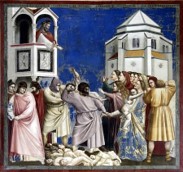
The Gospel of Matthew is the only existing historical reference that mentions the massacre of the children of Bethlehem. It seems to have passed under the radar of historical concerns. This is not difficult to understand when we consider that the common people of Bethlehem did not merit much attention at all in a world controlled by the likes of Herod or Caesar. As such, their indignities and sufferings would not matter all that much to the historians of the time. Matthew tells us that Herod was seized by fear at rumors of a child born in Bethlehem that was the promised Messiah. If these rumors were true, such a revelation meant the end of Herod and his dynasty. Unable to discover the identity of this child, he ordered all the young children in the region around Bethlehem to be killed. We would probably rather not have the memory of such a terrible event interrupt our feelings of Christmas cheer, but the Church insists that we look at the total event of Christ’s coming into the world, and the death of these innocent children is not an incidental part of the story of the Incarnation.

Shadows lurked beneath the light of the star of Bethlehem. Sister Wendy Becket, in one of her reflections, begs us to consider the disturbing irony in all this. The Lord Jesus, who is to end his life by dying for others, begins his life with others dying because of him. His safety is assured, but his own mother’s happiness is preserved amidst the misery of others. We must always remember that the Holy Family begins their mission in exile, as refugees. The world in which they lived was not a safe or easy place. God accepting for himself a human nature made him vulnerable to all the trials and tribulations of life. Christ did this with full awareness of what it would all mean and what it would affect. He would have to accept not only the joy and glory of being human but our sorrow and sufferings as well. If we are looking for a spiritual lesson in all of this, it might be for us to understand that though we are overjoyed as Christians at the coming of Christ, many people do not share our sense of elation.  Cruel King Herod represents all the powers that stand against Christ. These powers are not just outside ourselves; they lurk within us all. There are parts of ourselves that want nothing to do with Christ and jealously guard their independence from any incursion of his will. The Gospel of John reminds us of this truth in the proclamation that the Lord “came to what was his own, but his own did not accept him.” This is not meant simply as a reference to those who, like Herod, refused the Lord centuries ago; it is meant for all of us to carefully consider. What aspects of our own lives and the lives of others are we ready to destroy because of our refusal of Christ? The story of Herod is meant as a warning to us in this regard.

SCRIPTURE: Matthew 2:16-18

MUSIC VIDEO: Salvete Flores Martyrum

Performed by Collegium Instrumentale Brugense

Feast of the Holy Innocents painted by Fr. Warner D’Souza of Bombay, India

Read Full Post »

MEDITATION:

Written by Esau McCaulley, a contemporary pastor, professor, author, speaker, and public theologian.

December 26th, we remembered the first martyr, Stephen. December 27th, we remember John the Evangelist. According to tradition, he is the only one of the twelve apostles who did not suffer martyrdom (We pass over the end of Judas in silence)…John and Stephen speak to different aspects of the Christian experience. Some are called to the dramatic acts of faithfulness that forever mark their lives. Stephen is remembered for one speech. John, by contrast, is a witness to the long life of faithfulness. He was one of the first to follow Jesus. Later, after many of his friends and family had died, John lingered. I thought of this as I gave communion to a mostly older gathering this morning. The elderly amongst us are not signs of the church’s failure. They are witnesses to its success. The faith that began its work in them as children has sustained them as they near its consummation. John is not just an example of elderly faith. He accomplished something that few other Christian theologians have done. He articulated the beginning and end of the Christian story in a way that remains unmatched. It is the cold heart that is not stirred by the opening chapter of John’s gospel. He gets Christmas! God’s word has come among us. The light shines in the darkness.   But John also understands the church’s end: As John looked to the future of the church [in Revelation] he saw the worship of all tribes, peoples, and nations before the throne of the lamb. John brings gospel-based diversity to the heart of Christmas. Christmas, through the eyes of John, declares Jesus to be the redeemer of all mankind. It reminds the church that as long as we remain estranged from any of our brothers and sisters from other races, we fall far short of the purpose of the incarnation. God in Christ came to reconcile all to God and one another. This is the fruit of Christmas. John the Apostle and Evangelist bears witness to it.

SCRIPTURE: Acts 7

MUSIC VIDEO: Light of the World

Performed by Lauren Daigle

Statue of the Apostle John by Donatello

Read Full Post »

Reflection on Saint Stephen

MEDITATION:

Written by Karen Schultz, a contemporary author.

If I had to wager a guess, I’m going to presume that I’ll spend these first days of Christmas basking in all that is good in these holy days—the quiet peace of midnight Mass; the gentle joy that comes from taking in the sights of the Nativity at my local church; the flurry of presents being opened by starry-eyed little ones; and the fullness of meals shared with dear friends and family. There is so much that is good in my life this Christmas. I also know that at least a portion of these holy days will be spent reflecting on the imperfections of the season. Things like the physical absence of loved ones and the spiritual absence of relatives far from the Church. Things like the heartache of family misunderstandings that always feel more keen this time of year. Things like the longing that comes from prayers that simply weren’t answered on Christmas morning. I have to remind myself that even though Christmas is a beautiful time, it’s also a far-from-perfect time.

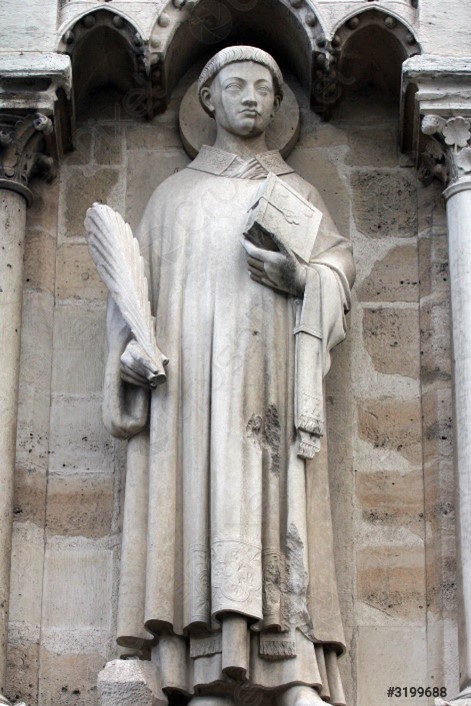
Every Christmas I also marvel at the Church’s wisdom to place Stephen at the very start of Christmastide. How fitting that the story of the first Christian martyr be told right in the beauty and messiness of the Christmas story! The Scriptures tell us that Stephen loved our Lord and King with a heart that was “filled with grace and power” (Acts 6:8). He had the joy of the Lord in his heart, even as he endured misunderstanding, abuse, and ultimately, death. You see, love for our newborn King didn’t mean that Saint Stephen was free from the sorrows of the human experience. But it did mean that he would go to the ends of all the messiness for the sake of the One Who came to us yesterday in a manger. I want a heart like Stephen’s, and I’m praying for that today for me and for you.

SCRIPTURE: Acts 7

MUSIC VIDEO: Good King Wenceslas

Performed by Michala Petri, recorder and Danish National Vocal Ensemble

Saint Stephen Statue on Notre Dame Cathedral in Paris

Read Full Post »

Reflection on God Incarnate

MEDITATION:

Written by Mark Roberts, a contemporary author.

The prologue of John’s Gospel tells the essential story of Christmas but not in the usual manner. John doesn’t give us angels and shepherds or wise men and a star. We don’t even have a babe born in a stable and laid in a manger. Rather, John reveals the theological essence of Christmas. And what is this theological core? It begins with the Word of God, the living Logos who was with God in creation. This eternal, divine Word “became human” (v. 14). That’s a valid rendering of the original Greek, which states literally that the Word (logos) became flesh (sarx). The Word of God didn’t just look like a human being. He didn’t just appear among us in some mysterious, other-worldly form. Rather, he became one of us, flesh and all.

Here is the wonder of the Incarnation, the in-flesh-ment of the divine Word. For centuries, theologians have sought to explain this mystery, but their efforts only take us so far. We’ll never fully comprehend how an infinite God could take on finite flesh, how an all-powerful God could become a weak, vulnerable baby. Yet this truth is absolutely central, not only to Christmas but also to Christian theology and Christian living. We must beware of the tendency to deny the full humanity of Jesus, even as we also boldly affirm his full deity. In fact, one of the oldest heresies claimed that Jesus was divine but not really human. Though most of us wouldn’t agree with this theology, we may have never taken time to reflect upon the implications of the Incarnation for our faith and life as Christians. In the next few days, I want to explore some of these implications with you. We will keep Christmas well when we focus on the fact of the Incarnation, something we can affirm without ever plumbing its depths. In Jesus, God became human. In Jesus, the all-powerful Word became weak and vulnerable. In Jesus, God reached out to us in a costly, humble, and fully incarnational way. The more we keep this truth in mind, the more we will be able to honor Christmas in all that we think and do.

SCRIPTURE: John 1:14-18

MUSIC VIDEO: What Child is This

Performed by Andrea Bocelli and Mary J. Bilge

Read Full Post »

« Newer Posts - Older Posts »