Feeds:
Posts
Comments

Archive for the ‘Religion’ Category

Seeing Everything Else

MEDITATION:

Written by C.S. Lewis (1898-1963), a British writer and theologian. This is an excerpt from his book, “Miracles.” 

Let us suppose we possess parts of a novel or a symphony. Someone now brings us a newly discovered piece of manuscript and says, ‘This is the missing part of the work. This is the chapter on which the whole plot of the novel really turned. This is the main theme of the symphony’. Our business would be to see whether the new passage, if admitted to the central place which the discoverer claimed for it, did actually illuminate all the parts we had already seen and ‘pull them together’. Nor should we be likely to go very far wrong. The new passage, if spurious, however attractive it looked at the first glance, would become harder and harder to reconcile with the rest of the work the longer we considered the matter. But if it were genuine then at every fresh hearing of the music or every fresh reading of the book, we should find it settling down, making itself more at home and eliciting significance from all sorts of details in the whole work which we had hitherto neglected. Even though the new central chapter or main theme contained great difficulties in itself, we should still think it genuine provided that it continually removed difficulties elsewhere. Something like this we must do with the doctrine of the Incarnation. Here, instead of a symphony or a novel, we have the whole mass of our knowledge. The credibility will depend on the extent to which the doctrine, if accepted, can illuminate and integrate that whole mass. It is much less important that the doctrine itself should be fully comprehensible. We believe that the sun is in the sky at midday in summer not because we can clearly see the sun (in fact, we cannot) but because we can see everything else.

PRAYER:

Written by Mary Lou Kownacki, a contemporary poet, author, and director of Monasteries of the Heart and Benetvision Publishing.

The Incarnation is no mystery, Jesus. You make it easy to understand. Because you walked our earth we are to see the face of the Divine in every person we meet: the friend who betrayed the family gathered for a meal the welfare mother the man on death row the clerk in the store the teenage thug on the corner those my government calls enemy and trains me to kill. Every time I love, the mystery of the Incarnation happens. Every time I love, I birth you on earth, Jesus. I fall on my knees and beg you, Jesus, deepen my living of the Incarnation.  Amen.
Read Full Post »

Doubting God’s Goodness

MEDITATION:

Written by Charles F. Stanley, a contemporary pastor and founder of In Touch Ministries.

Living in this fallen world can make us question God’s goodness. We might wonder why He doesn’t always fix our problems and give us what we want. For example, when Eve listened to the serpent’s lies, she began to doubt that the Lord had made the right choice in forbidding her to eat from the Tree of the Knowledge of Good and Evil. Why would He deprive her of wisdom and the enjoyment of such desirable food? Our thoughts are similar to Eve’s when we don’t agree with the Lord about what’s best for us. From a human perspective, “good” refers to that which is enjoyable, comfortable, or profitable. But God has a much higher standard and is always working to achieve His purpose—developing Christlike character in His children. Behind every restriction or commandment from the Lord is His loving care for His followers. He knows the consequences of sin and wants to deter us from choices that will wreck our lives.  Eve and her husband Adam both learned through disobedience that God knows what’s best.  We have the opportunity each day to discover His goodness by listening to His voice, obeying His commands, and trusting His wisdom. Whatever comes our way, we can know that He is working for both our temporal and eternal good.

PRAYER:

Written by Michael Perry (1942-1996), a British clergyman and hymn writer. This prayer is based on Psalm 145.

God our Father,

gracious and compassionate,

slow to anger and rich in mercy:

we thank you that you keep your promises,

and love all that you have made;

you uphold those who fall,

and lift up those who are bowed low;

you open your hand

and satisfy the desires of your people

who fear you,

you hear our cry and save us.

Therefore, we proclaim your goodness:

let every creature praise your holy name,

forever and ever. Amen.

Read Full Post »

Compassion

MEDITATION:

Written by Dallas Willard (1935-2013) an American philosopher known for his writings on Christian spiritual formation. This is an excerpt from “Renewing the Christian Mind: Essays, Interviews, and Talks.” 

A person of compassion is one who feels the needs of others and whose compassion is not something that can be turned on and off like a water faucet. It is always on. It is a constant burden of life. This is why so many reject the commandment to love others: because love and compassion require resources of personal strength and wisdom in action. Loving your neighbor as yourself is a matter of who you are, not, primarily, of what you decide to do.

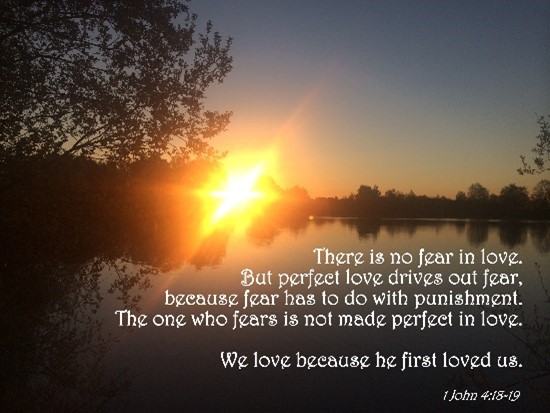
We can “afford” to be compassionate only if we know there is abundant compassion for us, toward us, by persons who have appropriate means. This is primarily God: “We love because he first loved us” (1 John 4:19). The perfect love of God toward us casts out fear. Think of the role of fear in the Good Samaritan story! So, our experience of God’s love is what allows us, empowers us, to set aside anger, selfishness, lusting, and so on in our relationships to others.

PRAYER:

Written by Geevtha Mary Samuel, a contemporary author.

Dear Lord, help me to take time to meditate on your Word and let it penetrate into my heart. Take away everything that hinders me while I spend quiet, quality time in Your word, and prepare myself in my walk with You. Amen.

Read Full Post »

God is Love

MEDITATION:

Written by Henry J. M. Nouwen (1932-1996), a Dutch priest, professor, writer, and theologian. This is an excerpt from his book “Here and Now.”  

It requires a lot of inner solitude and silence to become aware of divine movements. God does not shout, scream, or push. The Spirit of God is soft and gentle like a small voice or a light breeze. It is the spirit of love. Maybe we still do not fully believe that God’s Spirit is, indeed, the Spirit of love, always leading us deeper into love. Maybe we still distrust the Spirit, afraid to be led to places where our freedom is taken away. Maybe we still think of God’s Spirit as an enemy who wants something of us that is not good for us. But God is love, only love, and God’s Spirit is the Spirit of love longing to guide us to the place where the deepest desires of our heart can be fulfilled. Often we ourselves do not even know what our deepest desire is. We so easily get entangled in our own lust and anger, mistakenly assuming that they tell us what we really want. The Spirit of love says: “Don’t be afraid to let go of your need to control your own life. Let me fulfill the true desire of your heart.”

PRAYER:

Written by John Baillie (1886-1960), a Scottish theologian and minister.

I am bitterly ashamed, O God, that I must always be confessing to you my forgetfulness of you, the feebleness of my love for you, the fitfulness and listlessness of my desire. How many plain commandments of yours have I disobeyed today? How many little services of love have I withheld from you, O Christ, in that I withheld them from the least of these, your brethren, with whom I have had to do!

Read Full Post »

Dialogue Re-established

MEDITATION:

Written by William Barclay (1907-1978), a Scottish author, radio and television presenter, minister, and professor of Divinity and Biblical Criticism at the University of Glasglow. This is an excerpt from his book “The Mind of Jesus.”

Paul Tournier, the great Christian doctor, declares that life, in order to be life, must necessarily be dialogue. No one can find life in any real sense of the term in isolation. He must find it in contact, in dialogue, with others. The supreme dialogue of life is the dialogue with God. Paul Tournier writes: “Jesus Christ is the dialogue re-established. He is God coming to us because we cannot go to Him.” Jesus came with the good news that God is not a God who hides himself, that God is not a God whom only the philosophers may know, that God is the God who at all costs desires to be known, and who in the most costly way has revealed himself to all.

PRAYER:

Written by Michael Perry (1942-1996), a British clergyman and hymn writer. This is adapted from Psalm 138.

God our Father,

we thank you with all our heart

and sing to you our songs and hymns;

we bow before you in worship, and praise you,

because you have loved us and shown yourself faithful;

with all our heart:

Lord God, we thank you.

Your word is mighty like your name,

and when we call to you, you answer our prayer

and give us the strength we need;

with all our heart:

Lord God, we thank you.

Though you are very high,

you care for the lowly,

and the proud cannot hide from you;

when we are surrounded by troubles

you keep us safe;

with all our heart:

Lord God, we thank you.

Father, your love is eternal:

complete in us the work you have begun;

through Jesus our redeemer.  Amen.

Read Full Post »

Yes of the Heart

MEDITATION:

Written by Grace Adophsen Brame, a contemporary author, professor, lecturer, singer, and retreat leader who integrates spirituality and theology. This is an excerpt from her book, “Faith, the Yes of the Heart.”

When Luther wrote, “Faith is the yes of the heart, a confidence on which one stakes one’s life,” he was saying faith is a response of the whole self to God. It is not just our words: the creeds we confess, the prayers we pray, the way we argue our faith, or what we say in  teaching our children. It is not just our works and deeds: our faithful attendance at church, our participation on committees, or our acts of love toward others.  This yes is an inner assent of the will. It is a willingness to receive the grace and guidance of God. It can be so deep and far-reaching as to cause a real conversion of life, a real repentance, a turning around to go in a completely new direction. It always involves, says Luther, the daily death of the person we have been in order to fulfill our reason for being alive: to accomplish God’s will in our time and place.

PRAYER:

Written by Susie Larson, a contemporary author, speaker, and radio host.

Lord, I know that You have forgiven me for my sins. I thank You for Your unconditional love and grace. I am truly repentant and wish to overcome these tendencies. Now, Father, help me forgive myself. Erase my guilt and create a new heart within me. Amen.

Read Full Post »

God Will Come in Glory

MEDITATION:

Written by Brennan Manning (1934-2013), an American author and public speaker. This is an excerpt from his book “Reflections for Ragamuffins.”

Christmas is the promise that the God who came in history and comes daily in mystery will one day come in glory. God is saying in Jesus that in the end, everything will be all right. Nothing can harm you permanently, no suffering is irrevocable, no loss is lasting, no defeat is more than transitory, no disappointment is conclusive. Jesus did not deny the reality of suffering, discouragement, disappointment, frustration, and death; he simply stated that the Kingdom of God would conquer all of these horrors, that the Father’s love is so prodigal that no evil could possibly resist it.

PRAYER:

Written by Thomas Merton (1915-1968), an American Trappist monk, writer, theologian, mystic, poet, social activist, and scholar of comparative religion.

Ah, Lord God, thou holy Lover of my soul, when thou comest into my soul, all that is within me shall rejoice. Thou are my Glory and the exultation of my heart; thou are my hope and refuge in the day of my trouble. Set me free from all evil passions, and heal my heart of all inordinate affections; that, being inwardly cured and thoroughly cleansed, I may be made fit to love, courageous to suffer, steady to persevere. Nothing is sweeter than love, nothing more courageous, nothing fuller nor better in heaven and earth; because love is born of God, and cannot rest but in God, above all created things. Let me love thee more than myself, nor love myself but for thee. Amen.

Read Full Post »

MEDITATION:

Written by David Cerullo, an American Pentecostal minister and televangelist.

As the early church sought to celebrate Jesus’ birth, a day was set aside to commemorate the coming of the magi to bring Him gifts. This day was celebrated because it demonstrated that Jesus came to save the world. The day came to be called “Epiphany,” and it was celebrated 12 days after Christmas. Various traditions developed around this celebration, many of which focused on the magi and the giving of gifts.

Epiphany provided particular inspiration for William Dix, who was born in 1837 in Bristol, England. As a young man, Dix became ill and, during his recovery, he studied the New Testament carefully. He became fascinated with the magi. However, the more he studied, the more he felt that too many Christians focused on these men rather than on Jesus. His conviction inspired him to write the hymn we know as “What Child Is This?” In this hymn, Dix pointed us toward Jesus: “What Child is this who, laid to rest, on Mary’s lap is sleeping? Whom angels greet with anthems sweet, while shepherds watch are keeping?” Dix wanted those that sang his song to focus on Jesus. For He was “Christ the King, whom shepherds guard and angels sing.” In your life, use this Epiphany Day to help you think about what Jesus has done for you. As Dix realized, Jesus died that we might be freed from sin. What offering would be appropriate to give to the One who changed your life and gave you hope, freedom, and victory? Today, “bring Him incense, gold and myrrh,” and “enthrone Him” as the king in your heart.

SCRIPTURE: Matthew 2:1-2

MUSIC VIDEO: What Child is This?

Performed by The Ball Brothers

Read Full Post »

MEDITATION:

Written by Jill Briscoe, a contemporary author, educator, and speaker.

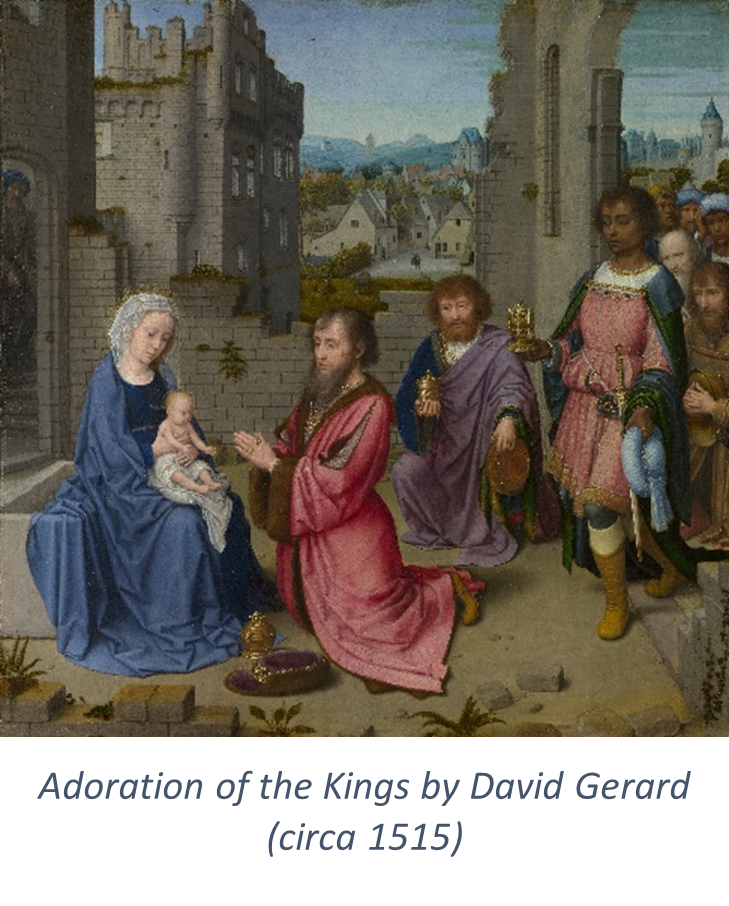
Many people start out seeking, but deep down they aren’t willing to bow to anyone. So even if they find Christ, their search will hold little satisfaction for them. Not so with the magi. They took their search to its logical conclusion. With wisdom and passion, they followed their clues and found the truth—the Christ child. When they found Jesus, they fell at His feet and worshiped Him. Their search may have begun out of sheer intellectual curiosity, but it ended in worship. As part of their worship, the magi brought very valuable gifts to Jesus. Gold was a gift worthy of Christ’s royalty. Frankincense was a gift to honor His deity. The bitter myrrh marked His humanity. Once they found who they were looking for, they didn’t hold back.

Sometimes we search, but we’re unwilling to open our lives to God once we find Him. We withhold our love, our honesty, our past, our pride, our future. What was at stake for these wise men? Do you really think they expected to find the infant son of a peasant couple to be the King of the Jews? What might it mean to them politically to worship another human being in such unimpressive circumstances? What were they opening themselves up for, having acknowledged that this child held a position superior to them? Yet they set aside all these possibilities and gave their gifts. Each of us in one way or another is searching and seeking. We must be wise in our seeking, seek wholeheartedly, and respond willingly and honestly to the truth we find. I pray that this Christmas season you will make room in your heart for seeking and worshipping the King.

SCRIPTURE: Matthew 2:9-12

MUSIC VIDEO: For This is Christmas (Wise Men Still Seek Him)

Performed by Erica Soelsinger

Read Full Post »

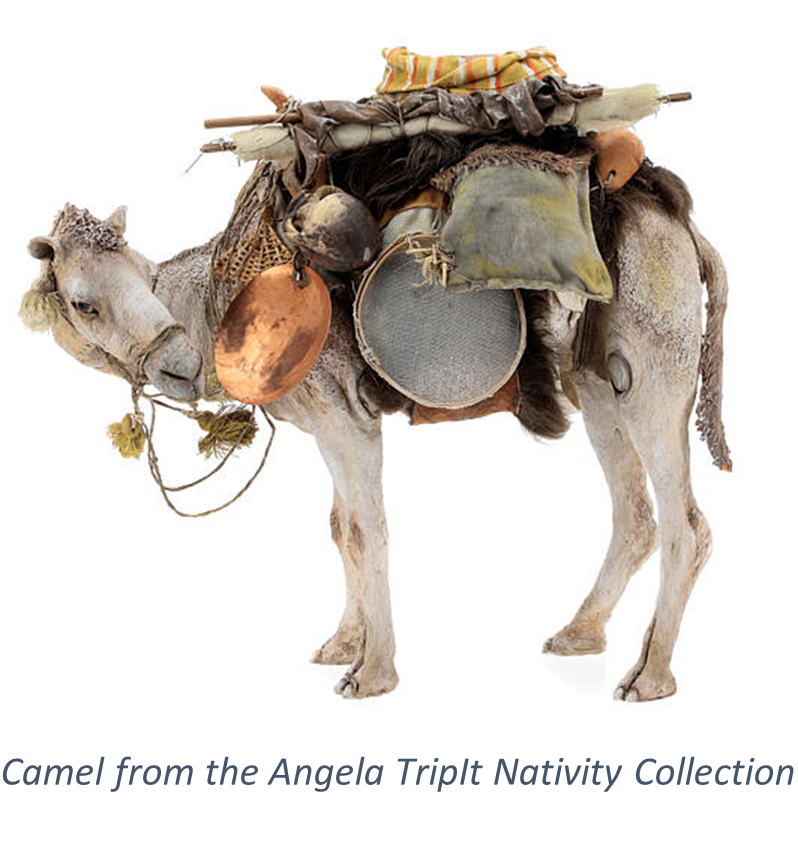
Reflection on Camels

MEDITATION:

Written by Joyce Meyer, a contemporary author and speaker.

We all remember the Christmas story: how Jesus was born of Mary in a stable and laid in a manger, how the Wise Men came from the east following a star that led them to the Holy Child, how they came in and worshiped Him, laying before Him precious gifts of gold, frankincense, and myrrh. In this story, we see that Mary and Joseph didn’t go out seeking gifts. Although they were forced to spend the night in a cold, dark stable, they didn’t send out messages asking for gifts. But because they were in the middle of God’s will, He sent them wise men from the east mounted on camels loaded down with provisions. I once heard a sermon preached on this subject in a church in Minnesota. It was titled, “The Camels Are Coming.” The basic message was that if we are in the will of God, He will always bring our provision to us. We don’t have to try to chase it down; it will seek us out. We don’t have to try to make things happen; God will bring them to us. I believe the camels will come for each of us if we’ll stay in the will of God. The only way we can expect this kind of provision is by being faithful to stay where He’s placed us and do the work He has given us to do for His kingdom’s sake. When we begin to believe this, we’re free to cast our care on Him. We don’t have to stay up all night fretting and worrying, trying to figure out what to do to take care of ourselves. We can simply deposit ourselves with God… and watch for the camels.

SCRIPTURE: 1 Timothy 6:17

MUSIC VIDEO: He Is the Gift

Performed by Shawna Belt Edwards

Read Full Post »

« Newer Posts - Older Posts »